Connect with us

Entertainment

‘Happy Raj’ movie review: George Maryan cannot save this tiresome, insincere comedy romp

Published

on

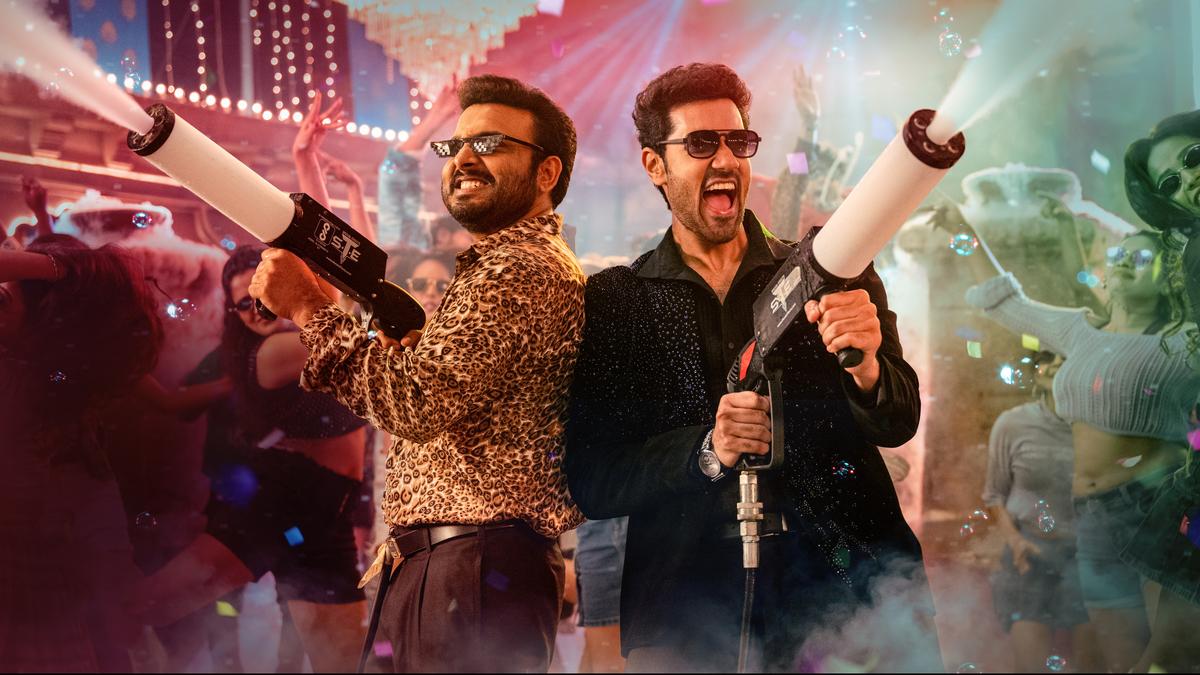
There’s a palpable discomfort in encountering a cinematic work that not only transparently manipulates its audience toward a contrived moral epiphany but also makes little effort to conceal its machinations. Such is the case with actor GV Prakash Kumar’s latest comedic venture, Happy Raj, which tumbles through a series of strained humorous attempts, largely predicated on actor George Maryan’s physical characteristics, in the apparent hope that a two-faced redemptive finale will somehow erase its numerous missteps.

This narrative device, a sudden pivot from a problematic premise to a manufactured “message,” is a well-worn staple in Tamil cinema. While countless films have adopted this structure, like Don, Dragon, and the recent releases Thaai Kizhavi and Youth, many managed to salvage their narratives with genuine humor, organically developed characters, and authentic conflict. However, Happy Raj, with its clumsily conceived plot and dishonest execution, offers no such redeeming qualities.

The fundamental flaw of the film lies in the crass and exploitative nature of everything preceding its eventual “message.” For over an hour, director Maria Raja Elanchezian’s film endeavors to cultivate empathy for its titular protagonist, Anand Raj, known as Happy. His life’s myriad troubles seemingly stem from his father, Kathamuthu (George Maryan, who commendably commits to the role), whose short stature and distinctive appearance are constant targets of ridicule among townsmen. Happy’s resulting shame is undeniably relatable; enduring incessant bullying due to his school teacher father’s derogatory nickname ‘Kuthiraimuttai’ (horse’s egg) and even witnessing a college romance dissolve over such humiliation would understandably inflict deep wounds.

Happy Raj could have charted a profoundly different course had it genuinely grappled with the inherent wretchedness of this situation. Instead, it regrettably weaponizes these circumstances for cheap gags or to elicit facile sympathy for Happy. From numerous jarring close-ups of George Maryan’s face to gratuitous shots of him emerging semi-naked from the shower, the film subjects him to indignity. When the focus shifts away from George, the narrative often exploits Happy’s insecurities for fleeting comedic relief, such as the contrived reaction of Kavya (Sri Gouri Priya), Happy’s colleague and eventual girlfriend, when a hesitant Happy sends her a family portrait for approval.

Kavya’s emotional entanglement with Happy further exemplifies the film’s awkwardness. She embodies the “I can fix him” trope, perceiving in Happy a project rather than a partner. In one of the film’s many uninspired moments, she later rationalizes her affection by explaining her pity for an unconfident man. The film, directed by Maria Raja Elanchezian, stars GV Prakash Kumar, Sri Gouri Priya, George Maryan, and Abbas, with a runtime of 156 minutes. Its storyline centers on a man’s struggles stemming from his father’s short gait, comedic appearance, and unsophisticated background.

The film rapidly devolves into repulsive and regressive territory, particularly in a sequence where Happy’s ill-advised father orchestrates an entire town to attend the wedding anniversary celebration of his prospective in-laws, Kavya’s business tycoon father Rajiv (a role in desperate need of Abbas’s presence) and her mother Reena. Kathamuthu interprets this as a traditional bride-seeing ceremony, arriving with his entire clan in traditional attire, bearing offerings. However, their presence and “unsophisticated” behavior deeply embarrass the “more refined” Rajiv. While Happy and Kathamuthu later make a superficial case against this classism, the film, until that point, shamelessly exploits this trope for cheap laughs, portraying the village folk as uncultured barbarians incapable of social grace.

This entire sequence is intended as a crucial turning point for Happy and Kavya, creating undue pressure for it to be maximally humorous. Yet, even jokes unrelated to George Maryan’s appearance, background, or the resulting social awkwardness consistently fall flat. The presence of comedians Madurai Muthu and Adhirchi Arun as Happy’s friends similarly fails to inject any much-needed levity into the film. Moreover, a recurring gag involving two paan-chewing North Indian train passengers, who inexplicably reappear at various social gatherings Happy attends, quickly transitions from mildly amusing to utterly irritating.

Md Mudassir Siddiqui is a distinguished computer science expert with a robust background in cutting-edge research and scholarly pursuits. As a research specialist, he has made significant contributions to the field, exploring innovative technologies and their applications. A passionate media enthusiast, Mudassir brings a creative flair to his work, with a specialized focus on new media. His expertise spans digital platforms, emerging media trends, and interdisciplinary projects that bridge technology and communication.

Continue Reading
Click to comment

Leave a Reply

Your email address will not be published. Required fields are marked *

Entertainment

‘RaaKaaSaa’ movie review: Sangeeth Shobhan’s supernatural fantasy tale banks big on humour

Published

on

The lasting impact of B. Vittalacharya’s fantasy epics from 1960s Telugu cinema is undeniable, captivating audiences with their blend of high-octane action, thrilling adventure, poignant romance, and memorable musical scores. His fearless protagonists routinely confronted curses, mortal dangers, and malevolent spirits, navigating intricate challenges that provided viewers with excellent entertainment value and kept them enthralled.

While Vassishta’s *Bimbisara* (2022) offered a respectful nod to Vittalacharya’s cinematic universe, debutant director Manasa Sharma embarks on a fresh, lighthearted contemporary reimagining of his classic narrative devices in *RaaKaaSaa*. This supernatural thriller, generously laced with comedic elements, introduces audiences to the carefree NRI, Veera Babu (portrayed by Sangeeth Shobhan), as he finds himself embroiled in a series of perplexing predicaments within a village where superstitions are deeply entrenched.

Directed by Manasa Sharma, *RaaKaaSaa* (Telugu) stars Sangeeth Shobhan, Nayan Sarika, Getup Srinu, and Vennela Kishore, running for 133 minutes. The narrative centers on a seemingly carefree NRI who, upon returning to his ancestral village for a wedding, inadvertently becomes ensnared in an ancient, terrifying ritual involving a cursed fort and a formidable demon after a series of unfortunate events.

The story unfurls around a fabled, cursed fortress, beginning with compelling folklore that speaks of a fearsome demon demanding human sacrifice to avert village destruction. Against a backdrop of ominous prophecies, the indulged Veera Babu makes his way back from the USA, intending to solidify a romantic connection with a local girl. However, when his romantic endeavors falter, he inadvertently becomes a central figure in a terrifying ritual that irrevocably alters his life’s trajectory.

In its opening acts, *RaaKaaSaa* largely adheres to the established tropes of the horror-comedy genre. It meticulously crafts a haunting backstory for the fort, patiently establishes the tranquil village atmosphere, and expertly lays the groundwork for the central conflict. Our amiable, somewhat naive protagonist, navigating a recent breakup, finds companionship in his sidekick Balu (Getup Srinu) and rekindles a connection with his childhood sweetheart, Subbalakshmi (Nayan Sarika).

Though situated within a fantastical realm, the village setting exhibits a distinctly anachronistic charm. Quaint customs abound, such as Veera Babu being instructed to apply *kajal* to a woman’s waist as a romantic gesture. The local headman dispenses justice through eccentric punishments, while a cunning senior priest leverages occult practices to influence the villagers. Unsurprisingly, it falls to an educated young individual to challenge these entrenched beliefs.

While the interspersed comedic interludes, satirizing local peculiarities and quirky personalities, deliver some laughs, they don’t consistently achieve uproarious effect. The screenplay occasionally leans towards being contrived or overly talkative. Nevertheless, Sangeeth Shobhan anchors the film effectively with his comedic timing, reminiscent of the *MAD* franchise. The narrative truly gathers momentum once the director adeptly establishes the crucial connection between Veera Babu and the cursed fort.

The visual aesthetics and the escalating tension leading up to the ritual within the ominous fort are particularly captivating. The screenplay ingeniously juxtaposes narrative suspense with a vein of dark humor, often through well-placed coincidences. Director Manasa Sharma’s greatest asset lies in her confident construction of the fantasy world’s intricate layers, a factor that largely sustains the film’s latter half, even amidst minor narrative stumbles.

The sequences drawing clear inspiration from Vittalacharya, as the protagonists uncover clues and surmount formidable obstacles within the fort to vanquish the demon, form the backbone of the film. Yet, precisely when the narrative seems poised for a more serious shift, an excessive reliance on humor often detracts from its potential impact. While Getup Srinu and Vennela Kishore deliver genuinely amusing performances, some comedic bits occasionally feel forced and redundant.

A more compelling and nuanced version of the demon’s origin story, unfortunately, surfaces only in the film’s concluding moments. The director might have benefited from dedicating more screen time to developing this intriguing subplot rather than consistently favoring broad, crowd-pleasing humor. The narrative thread involving enchanted daggers and a re-examination of the demon’s past, imbued with a surprising degree of compassion, injects a much-needed depth into the storyline. While the film’s core identity is undeniably rooted in lighter moments, Manasa Sharma’s directorial prowess is most evident when the comedic antics yield to more robust world-building.

Continue Reading

Entertainment

‘Maamla Legal Hai’ season 2 Series review: Ravi Kishan holds court with bizarre cases, bolder laughs

Published

on

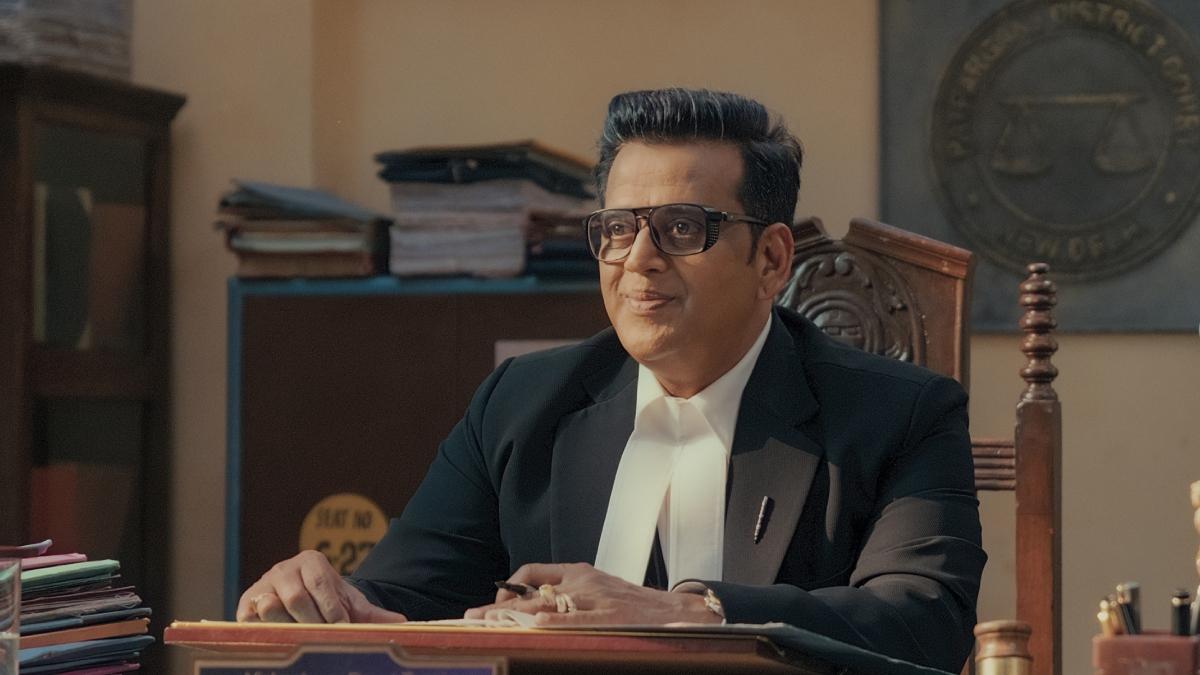
The Patparganj District Court in Delhi reopens its doors, and with it, the comedic anarchy of the Indian judicial system reaches unprecedented levels in the new season of Maamla Legal Hai. While its debut installment established that district courtrooms could surpass the humor of a stand-up special, the second season amplifies its thematic ambition, expertly weaving incisive societal critique with authentic, side-splitting comedy, all underscored by a thoughtful layer of introspection. This season marks a significant shift in the power dynamic, as showrunner Sameer Saxena and director Rahul Pandey reposition the series’ central figure. The once-shrewd lawyer V.D. Tyagi, portrayed by Ravi Kishan, now finds himself embodying the very system he once skillfully navigated. Assuming the robes of Principal District Judge, Tyagi endeavors to demystify the traditional image of the judiciary, replacing its unyielding protocol and elitism with a vibrant, accessible human touch. Yet, he quickly learns that presiding over justice is a considerably more convoluted challenge than practicing law. As Tyagi grapples with the burden of judicial responsibility, his insider perspective allows for a more potent critique of procedural sluggishness, systemic prejudice, and the labyrinthine bureaucracy. While he champions transformative initiatives, his colleagues, often constrained by reputation, implore him to avoid unconventional paths and maintain a cautious equilibrium.

This eight-episode Hindi series features an ensemble cast, including Ravi Kishan in the pivotal role, alongside Dinesh Lal Yadav, Dibyendu Bhattacharya, Anant Joshi, Naila Grewal, Nidhi Bisht, Kusha Kapila, and Imran Rasheed. The core premise sees V.D. Tyagi finally ascending to the judge’s bench, only to confront the undeniable truth that administering justice amid outlandish real-life cases proves infinitely more intricate than relying on his former street-smart strategies.

Breathing fresh life into the ostensibly ordinary challenges and ambitions of middle-class individuals, the series consistently focuses on the daily peculiarities of local court proceedings, yet manages to evade redundancy. Echoing the stylistic essence of Aziz Mirza’s Nukkad and Circus, its strength lies in an ensemble of eccentric, meticulously crafted personalities who coalesce into a closely-knit, frequently chaotic collective. The program adeptly wields satirical wit and dark humor to underscore critical systemic deficiencies within the Indian judicial framework, drawing parallels to how classic Doordarshan programming utilized gentle narratives to impart profound societal messages. Its episodic structure, where individual installments frequently address singular, occasionally outlandish legal disputes, recaptures the allure of a bygone television era often contrasted with melodramatic programming. Director Rahul Pandey masterfully reimagines a setting where emotional resonance is amplified, humor is sharpened, and characters possess both comedic depth and genuine relatability. Notably, characters like Law (Amit Pandey), Order (Vikram Pratap), and Daleel (Imran Rasheed) transcend mere personifications or linguistic cleverness; they evolve into palpable embodiments of the inherent disorder within the courtroom.

Beyond its comedic elements, the series light-heartedly scrutinizes institutional shortcomings—from rodents compromising evidence in storage to judges perpetually facing public scrutiny—yet consistently anchors its narrative in genuine empathy and human understanding. Vignettes abound, featuring an intoxicated individual endeavoring to serve as an expert witness in a counterfeit liquor case, a junior lawyer enduring playful taunts from his elderly landlady, or even a charlatan audacious enough to assume a judicial role. Crucially, the humor primarily targets the inherent illogicality of the system and societal norms, rather than the individuals caught within their confines. Following an initial burst of surprise, the creative team skillfully unveils the underlying human emotion driving sensational headlines with a delicate touch. Viewers are subtly prompted to consider that while frequent postponements might appear odd and strategic delays seem manipulative to an external observer, they can, on occasion, stem from fundamental tenets of natural justice and fairness. The series culminates by presenting Tyagi and the viewership with the profound ethical dilemma surrounding capital punishment.

While a few narrative arcs might occasionally extend past their comedic efficacy, and the creators have not yet fully explored the challenges faced by legal professionals transitioning from the Indian Penal Code to the Bharatiya Nyaya Samhita, the writing team, under the leadership of Kunal Aneja, persistently draws inspiration from authentic events.

Continue Reading

Entertainment

‘Leader’ movie review: ‘Legend’ Saravanan is the dark knight in this largely gripping masala actioner

Published

on

It is difficult to overlook the memorable, if somewhat bewildering, experience of attending a 4 AM screening of Saravana Stores’ proprietor Saravanan’s highly anticipated 2022 cinematic debut, The Legend. That particular film proved to be a chaotic, over-the-top spectacle that, for this reviewer, challenged the very essence of film appreciation, leaving a profound sense of exhaustion in its wake. Consequently, a distinct feeling of relief washed over upon witnessing Saravanan’s much more understated entrance in his latest venture, Leader, mercifully devoid of blaring EDM.

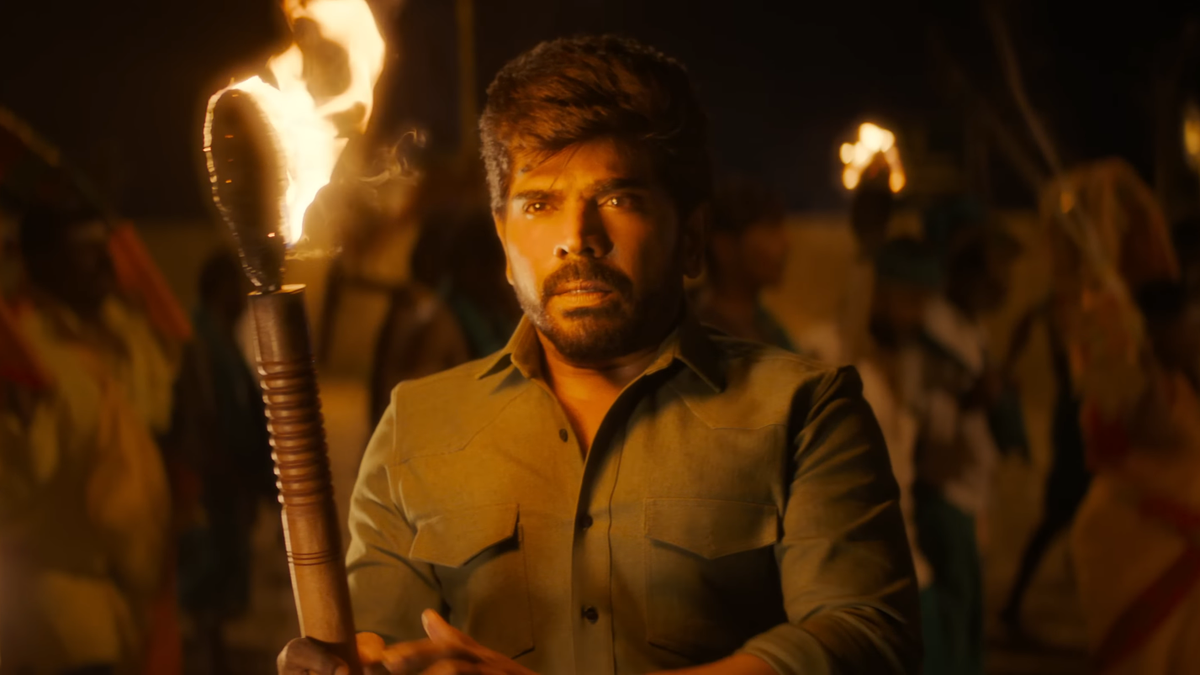
Fortunately, this toned-down approach extends beyond his initial appearance. In his sophomore leading role, Saravanan demonstrates significant growth, embracing a more serious demeanor. His character is no longer merely a walking advertisement for his retail empire but a discernible human figure integrated within the narrative’s flow. While moments of pronounced heroism are still present—such as the intermission sequence where he slow-walks away from a massive explosion towards the camera—these instances feel more organically woven into a serious action-drama framework, a testament to writer-director RS Durai Senthilkumar’s vision.

The film opens with an immediate sense of urgency, justified by the complex plot elements requiring introduction and development. We are quickly immersed in the world of Salt (Prabhakar), a local enforcer and the clandestine power broker of the Thoothukudi port. Salt is seen brokering a perilous deal with an international syndicate head known only as The Devil (Santhosh Prathap), involving the illicit shipment of Ammonium Nitrate containers through the port. Meanwhile, Inspector Chandhra Sathyamoorthy (Andrea Jeremiah) faces constant obstruction from her superiors in her efforts to investigate Salt, soon realizing their complicity in his operations. Thankfully, Chandhra finds an ally in SP Bakthavachalam (Shaam), a newly appointed lieutenant colonel turned police officer, though he cautions her against independent investigations.

Undeterred, Chandhra predictably persists with her probe, her attention drawn to Shakthivel (Saravanan), a local mechanic who regularly accesses the port to service Salt’s vehicles. However, a sudden altercation between Shakthivel and Salt’s gang, stemming from a misunderstanding, serves as a pivotal moment. It is at this juncture that both we, the audience, and Inspector Chandhra begin to comprehend that Shakthivel’s role extends far beyond that of a simple mechanic; indeed, the unfolding events suggest he is the true focal point of this intricate web.

Early in the narrative, Saravanan makes a bold, if somewhat clumsy, thematic attempt—he critiques contemporary audiences who often dismiss displays of familial emotion as ‘cringe.’ While the sequences depicting Shakthi and his daughter Irene are indeed fraught with awkwardness, one must concede to the effort. The script often presents a dichotomy: for every handful of sensible narrative choices, an equally jarring or illogical one surfaces. This inconsistency is evident in bizarre plot devices, such as a secret agent bringing her mother to a live shootout to demonstrate a colleague’s platonic relationship, or the convenient shifting of internal organs to facilitate plot progression. Furthermore, the film operates in a reality where a mechanic’s lavish lifestyle or his employer’s decision to house him goes unquestioned—or perhaps, generously, these anomalies are intended as a subtle commentary on class distinctions and traditional workplace dynamics.

Despite these narrative eccentricities and occasional lapses in logic, when Leader finds its stride, it effectively seizes the viewer’s attention. The film’s relentless pace and packed storyline create a gripping, rollercoaster-like experience that, at its best, is thoroughly engaging.

Continue Reading

Trending