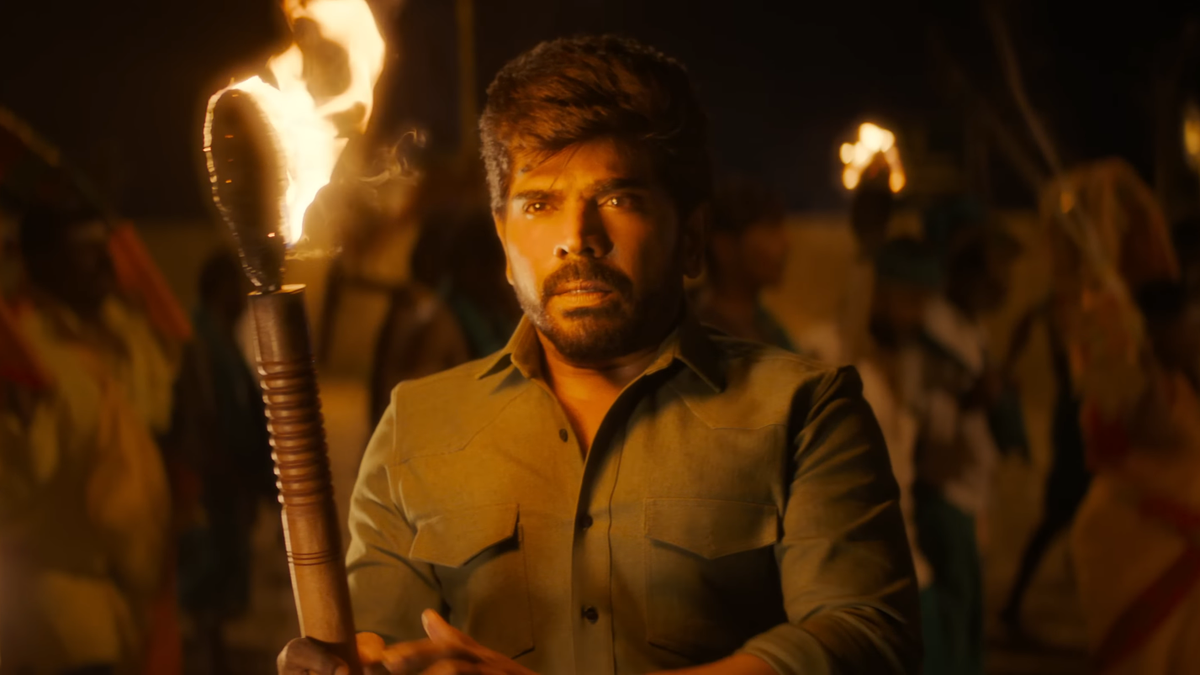
Filmmakers occasionally opt for established narrative structures rather than venturing into entirely novel tales. Yet, a fresh backdrop can invigorate even a well-trodden path. Such is the case with Abhilash Reddy’s Telugu sports drama, “Biker,” where familiar story outlines, subplots, and character arcs are given new life. The introduction of motocross—a sport largely, if not entirely, uncharted territory in Indian cinema—lends a distinctive luster. This novelty, coupled with a sophisticated audio-visual presentation and commendable performances, ensures a compelling viewing experience.
In an era where “world-building” has become a pervasive, often superficial, buzzword typically associated with elaborate, VFX-driven fantasy realms, “Biker” offers a welcome departure. Its commitment to actual locations provides a grounding authenticity that is truly refreshing. The visual allure is further enhanced by the gritty reality of dust-choked, uneven off-road tracks and expansive plains seamlessly meeting distant, undulating hills on the horizon.
Employing a non-linear narrative, “Biker” gracefully navigates across decades—the 1990s, 2000s, and even glimpses of the 80s—to weave an intricate saga spanning two generations of fathers and sons. The film’s opening moments present an endearingly idyllic portrayal of the Narayan family—Vikas (Sharwanand), Ananya (Malvika Nair), and their young son—engaging in lighthearted scenes at school and home. This seemingly perfect tableau, however, immediately prompts a subconscious query: what unresolved tension lies beneath this veneer of happiness?
Abhilash Reddy Kankara directs this Telugu drama, “Biker,” starring Sharwanand, Malvika Nair, Rajashekhar, and Atul Kulkarni. Clocking in at 162 minutes, the central premise revolves around a son’s formidable challenge to restore his father’s honor after a significant passage of time, with monumental consequences hanging in the balance.
Reddy masterfully uncovers deeply entrenched familial strains, revealing historical wounds that can only truly mend when a rightful champion asserts their dominance and legacy.
The story unfolds against the vibrant backdrop of Coimbatore, a city renowned for its flourishing motocross scene. While predominantly featuring Telugu-speaking characters, the film judiciously incorporates multiple languages, ensuring a rich and authentic regional tapestry.
An early, poignant moment—where Vikas’s young son, clad in a miniature biker suit, reverently declares his father a superhero and expresses admiration for an old motocross photograph—unavoidably evokes comparisons to Gowtam Tinnanuri’s critically acclaimed “Jersey.” Abhilash Reddy subtly acknowledges this esteemed sports drama through various narrative cues, positioning “Biker” almost as its thematic successor. Concurrently, he also draws upon thematic elements from his own earlier works: the debut web-series “Loser” (another sports and family drama) and his first feature film, “Maa Nanna Superhero,” a resonant father-son narrative.
While “Biker” embraces a more commercial, “masala”-infused sensibility compared to “Jersey,” its strength lies in the rich tapestry of interconnected relationships that imbue the narrative with essential emotional weight. The script truly excels in its character development rather than its overarching plot. The innocent reverence the young son holds for Vikas mirrors Vikas’s own profound respect for his father and coach, Sunil (Dr. Rajashekhar). Furthermore, the film explores the nuanced, albeit less prominent, dynamic between Vikas’s primary rival and his father. The evolving relationship between Vikas and Ananya, particularly how parenthood introduces elements of caution and practicality to raw courage, serves as another thematic resonance with “Jersey.” A final, yet significant, bond is depicted between Ananya and her mother, Tulasi.
Beyond the central figures, a significant number of supporting characters are endowed with credibly developed individual arcs. Tulasi’s portrayal, for example, stands out; her reaction to a potentially disconcerting revelation (for the 90s context) is devoid of histrionics. Despite her confined screen time, she establishes a powerful presence through her unwavering support and her crucial guidance to Ananya, encouraging her to overcome personal apprehension. Similarly, Ananya is crafted as far from a subservient character. While the film predominantly focuses on the high-octane world of fathers, sons, and their adrenaline-fueled sport, it thoughtfully carves out space for Ananya’s agency—allowing her to pursue her chosen profession and exert influence in critical junctures.
Collectively, these meticulously crafted characters and their emotionally charged subplots elevate the motocross sequences, rendering them thoroughly captivating. The intensity of the racing circuits and the intricate maneuvers of the bikers are captured with remarkable finesse, a testament to Yuvar’s accomplished cinematography.

















 Tech9 months ago
 Bihar9 months ago
 Results9 months ago
 Admissions9 months ago
 Results9 months ago
 Education9 months ago
 Tech9 months ago
 Education9 months ago