Connect with us

Research

TimesNow Education Summit 2025 Concludes in Delhi

Prachi Sharma

Published

on

Education leaders and policymakers engage in discussion during the TimesNow Education Summit 2025 in New Delhi, focusing on innovation, future learning, and reforms in Indian education.

The 2nd TimesNow.in Education Summit 2025 successfully concluded in the national capital, bringing together leading voices from India’s education ecosystem to deliberate on the future of learning, innovation, and reforms in the country’s school and higher-education sectors.

The summit served as a significant platform for policymakers, educationists, academic leaders, ed-tech innovators, and institutional heads to engage in meaningful dialogue on how India’s education system can evolve to meet emerging global and national challenges. Discussions focused on aligning education with future skills, improving learning outcomes, and strengthening institutional frameworks.

Key sessions highlighted the importance of technology-driven learning, curriculum reforms, teacher training, and industry-academia collaboration to ensure students are better prepared for a rapidly changing job market. Speakers also emphasized the need for inclusive and equitable education, ensuring access and quality across regions and socio-economic backgrounds.

Higher education reforms under the National Education Policy (NEP), research-driven universities, and innovation-led campuses were major themes of discussion. Experts shared insights on how Indian institutions can become globally competitive while staying rooted in local needs and knowledge systems.

The TimesNow Education Summit 2025 reaffirmed the role of collaboration between government, institutions, and the private sector in shaping a resilient and future-ready education system. The event concluded with a shared vision of transforming Indian education through innovation, policy support, and learner-centric approaches.

Prachi Sharma is a dynamic journalist and anchor known for her insightful reporting and engaging on-screen presence. With a strong command over storytelling and a flair for content creation, she brings clarity and depth to every piece she presents. Prachi’s versatile skills extend beyond journalism—her ability to craft compelling written content makes her a valuable voice in the media landscape. Whether on camera or behind the scenes, she is committed to delivering impactful narratives that inform, inspire, and connect with audiences.

Bihar

Param Rudra Supercomputer Begins Operations at IIT Patna, Boosting Research in Bihar

Prachi Sharma

Published

on

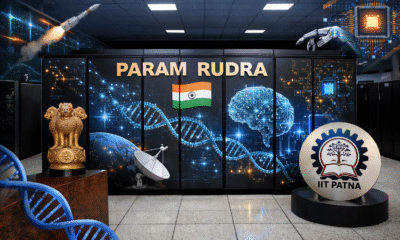
Param Rudra supercomputer at IIT Patna marks a major leap for advanced research, strengthening AI, data science and health technology capabilities in Bihar and eastern India.

In a major boost to scientific research and advanced computing in eastern India, the state-of-the-art Param Rudra supercomputer has been inaugurated at the Indian Institute of Technology (IIT) Patna, marking a historic milestone for Bihar’s academic and research landscape.

The powerful system — boasting a peak performance of approximately 838 teraflops — was officially launched under the National Supercomputing Mission (NSM) by Amitesh Kumar Sinha, Additional Secretary in the Ministry of Electronics & Information Technology (MeitY). It is the first supercomputer of its kind in any institution or government facility in Bihar, bringing capabilities normally found only in premier research hubs to the region.

A Strategic Boost for Local Research

Officials from IIT Patna and MeitY highlighted that Param Rudra will provide critical high-performance computing (HPC) resources for students, faculty, and researchers. The system is expected to support complex computational tasks that were previously difficult or impossible due to limited local resources.

“This is a historic milestone for Bihar and its neighbouring regions,” said the director of IIT Patna, emphasizing the transformative impact the supercomputer will have on research across multiple scientific and engineering domains.

Under the National Supercomputing Mission

Param Rudra’s installation at IIT Patna comes as part of the Government of India’s ambitious National Supercomputing Mission — a flagship initiative jointly overseen by the Department of Science & Technology (DST) and MeitY. The mission aims to build a network of high-performance computing infrastructure across academic and research institutions nationwide to accelerate innovation and scientific discovery.

According to official mission data, India has already deployed dozens of supercomputers with a combined computing capacity in the petaFLOPS range, and further expansion is planned to exceed 100 petaFLOPS in the coming phases. This effort also includes developing indigenous HPC hardware and software technologies to reduce dependence on foreign systems.

Empowering Local Innovation & Education

Param Rudra is expected to benefit hundreds of students and faculty members across various departments at IIT Patna. Researchers will be able to undertake advanced simulations, data analysis, and modelling in fields such as artificial intelligence, data science, materials science, computational biology, fluid dynamics, and climate modelling without leaving the state.

Experts also note that having such powerful computing infrastructure locally can help retain talented researchers in Bihar and encourage collaborations with industry, startups, and neighbouring universities — ultimately strengthening the region’s research ecosystem.

Looking Ahead

The launch of Param Rudra at IIT Patna represents more than just a technological upgrade: it signals Bihar’s arrival on the map of advanced scientific research hubs in India. As computing needs continue to grow in disciplines ranging from health tech to environmental science, the supercomputer is poised to play a central role in shaping research and innovation for years to come.

Continue Reading

Research

15 Million Primary-Age Girls Still Out of School, Says UN Women Report

Prachi Sharma

Published

on

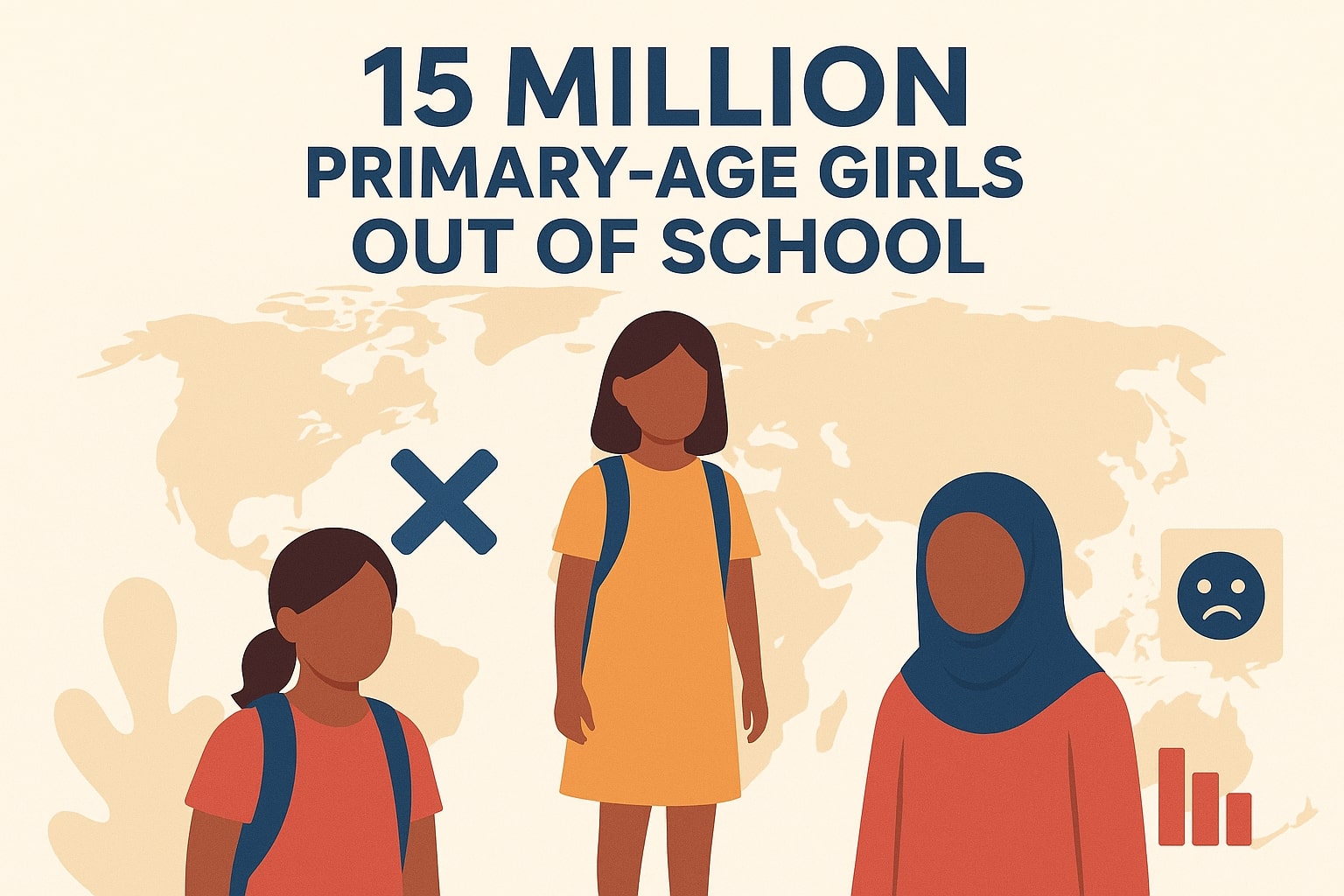
Highlighting the global crisis: 15 million primary school-aged girls are deprived of education, as symbolic elements illustrate the challenges they face. (AI generated)

A new UN Women report has revealed that around 15 million primary school–age girls across the globe are not enrolled in school, compared with about 10 million boys of the same age. While global averages suggest progress towards gender parity in education, the report warns that this improvement masks sharp inequalities in certain regions. In some areas, nearly 48.1% of girls remain excluded from primary education.

The report identifies multiple, overlapping barriers that keep girls out of school. Early pregnancies, domestic responsibilities, child marriage, and cultural norms that undervalue girls’ education continue to push young learners out of classrooms. In Afghanistan, for example, 78% of young women are not engaged in education, employment, or training—almost four times the rate of young men. This exclusion also carries significant economic costs, with experts estimating that denying secondary education to Afghan girls could shrink the country’s GDP by 2.5% each year.

Beyond primary education, the picture is even more troubling. UNICEF estimates that 119 million girls worldwide are currently out of school across all education levels, including 34 million in primary school. The UN Women Global Gender Snapshot 2024 notes that since 2015, there has been a reduction of 5.4 million in the number of girls out of school. However, the overall scale of the challenge remains substantial, suggesting that progress is far too slow.

The stakes are high—not only for the girls themselves but for their communities and countries. Education offers girls the tools to break cycles of poverty, improve health outcomes, delay early marriage, and participate more fully in economic and civic life. The benefits extend well beyond individual lives, contributing to stronger economies, healthier societies, and reduced inequality.

The report serves as a call to action, urging governments, NGOs, and communities to look beyond infrastructure and address the deeper structural and cultural factors preventing girls from learning. Achieving true educational equality will require sustained investment, targeted policies, and a global commitment to ensuring that every child—regardless of gender—can access and complete a quality education.

Continue Reading

Education

NEP 2025 Brings AI, Coding, and Cybersecurity into Classrooms to Boost Research Readiness

Prachi Sharma

Published

on

Students explore AI, coding, and cybersecurity in a dynamic classroom setting, reflecting NEP 2025’s focus on tech-integrated, future-ready education.

India’s education system is undergoing a major transformation with the integration of Artificial Intelligence (AI), data literacy, coding, and cybersecurity into school and college curricula. This change is being introduced as part of the National Education Policy (NEP) 2025, which emphasizes building strong foundations in digital and technological skills from an early stage.

The inclusion of these subjects aims to enhance applied learning and boost research readiness among students. By learning coding and data skills, students will not only understand how technology works but also develop the ability to solve real-world problems using computational thinking. AI and cybersecurity lessons are expected to foster awareness about digital safety and prepare students for the future of work, where such knowledge is essential.

This shift reflects the growing need for a tech-savvy workforce in India. As the country invests more in digital innovation and research, introducing students to emerging technologies at the school and undergraduate levels ensures they are better prepared for careers in science, technology, and research-intensive fields.

The policy also encourages institutions to focus on interdisciplinary education, combining technical skills with critical thinking and ethical awareness. This approach is designed to make students not just job-ready, but also capable of contributing meaningfully to research, innovation, and national development.

Continue Reading

Trending