Entertainment
When the nagaswaram followed a traditional Carnatic concert pattern

Published
2 months agoon
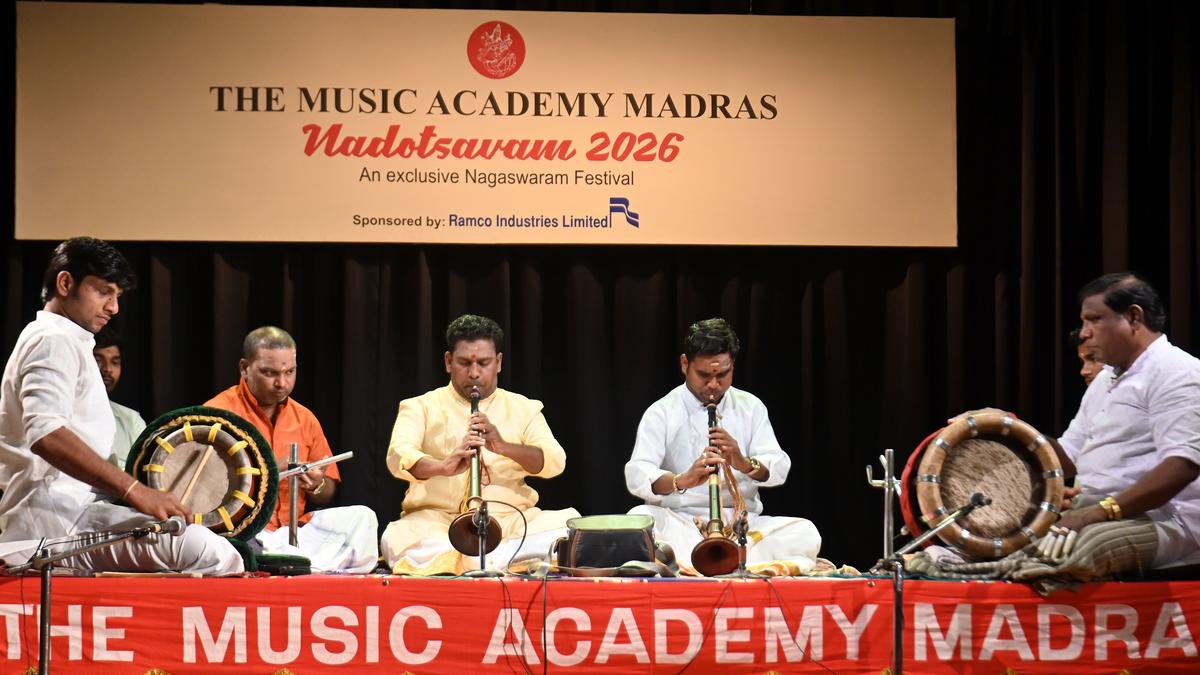
The concluding performance of Nadotsavam 2026, an event meticulously curated by The Music Academy, featured the distinguished talents of Pazhayaseevaram G. Kalidass and Koleri G. Vinoth Kumar. The evening commenced in classic style with a varnam in Charukesi, ‘Innum en manam,’ featuring initial thavil accompaniment by Tirukkadayur T.G. Babu during the muktayi swara, before Panapakkam Tamizhselvan assumed percussion duties. The nagaswaram artistry was notable for its expansive dynamic range, adapting with finesse from a gentle mellowness to a resonant boldness as the melodic demands evolved. This was succeeded by Mazhavai Chidambara Bharati’s ‘Pahi pahi balaganapathi’ in Hamsadhwani, enriched by intricate kalpanaswaras, throughout which the thavil accompaniment maintained a harmonious and organic synchronicity with the nagaswaram.
Kalidass delivered an evocative alapana in Anandabhairavi, setting the stage for Muthuswami Dikshitar’s ‘Kamalamba samrakshatu maam,’ a revered piece from his Kamalamba Navaavarana kritis. This particular rendition commemorated the composer’s 250th birth anniversary. Performed in the keezh kaalam (slow tempo), the kriti demanded, and received, impeccably precise thavil support, with the kala pramanam (rhythmic integrity) steadfastly maintained. Vinoth’s continuous shadjam resonance provided a subtle yet vital foundational anchor, deepening the collective tonal effect of the ensemble.
Next, Tyagaraja’s ‘Neevada ne gana’ in Saranga was presented. The transition to the mel kalam (fast tempo) distinctly highlighted the raga’s inherently brighter and more effervescent character, offering an effective and striking contrast to the contemplative mood established by Anandabhairavi.
The centerpiece of the concert unfolded in Purvikalyani, featuring Dikshitar’s ‘Meenakshi memudham.’ Kalidass’s alapana blossomed with intricate melodic phrases, which Vinoth echoed with remarkable responsiveness, replicating each with commendable clarity in the sangatis. Despite occasional, minor instances of pitch inaccuracy from Vinoth, their musical dialogue possessed a natural synergy that profoundly enhanced the raga’s expression. During the kalpanaswaras segment, Babu provided thavil accompaniment for Kalidass, while Tamizhselvan supported Vinoth.
The Thani Avarthanam was expertly structured, grounded by a judicious application of karvais (sustained pauses) and a measured kuraippu (rhythmic deceleration) in the lower octaves, steadily progressing towards a compelling conclusion. The subsequent mohara korvai showcased intricately developed sollu patterns, with Babu’s percussion artistry maintaining its authoritative presence even through the most complex rhythmic variations. Taken as a whole, the thani delivered periods of truly captivating musical interaction.
The concert concluded with Lalgudi Jayaraman’s thillana in Misra Sivaranjani, celebrated for its vibrant rhythmic energy. This was followed by ‘Eru mayil eri,’ a captivating ragamalika that skillfully interwoven the distinct melodic textures of Bhagesri, Hamsanandi, Atana, and Surutti.
Md Mudassir Siddiqui is a distinguished computer science expert with a robust background in cutting-edge research and scholarly pursuits. As a research specialist, he has made significant contributions to the field, exploring innovative technologies and their applications. A passionate media enthusiast, Mudassir brings a creative flair to his work, with a specialized focus on new media. His expertise spans digital platforms, emerging media trends, and interdisciplinary projects that bridge technology and communication.

You may like


‘Normal’ movie review: Bob Odenkirk powers a darkly comic small-town shootout
-
Y.Gee. Mahendra’s new play is a sequel to Sivaji Ganesan’s popular film Paritchaikku Neramachu
-
‘Trevor Noah: Joy in the Trenches’ review: Noah asks the tough questions, but makes you laugh anyway
-
‘Beef’ Season 2 review: Too many cooks, not enough meat on the bone
‘Kaakkee Circus’ series review: Sans big names, this series is a ‘slow burn’ comedy
-
Pallichattambi movie review: Heavy-handed approach drags down this ahistorical period movie