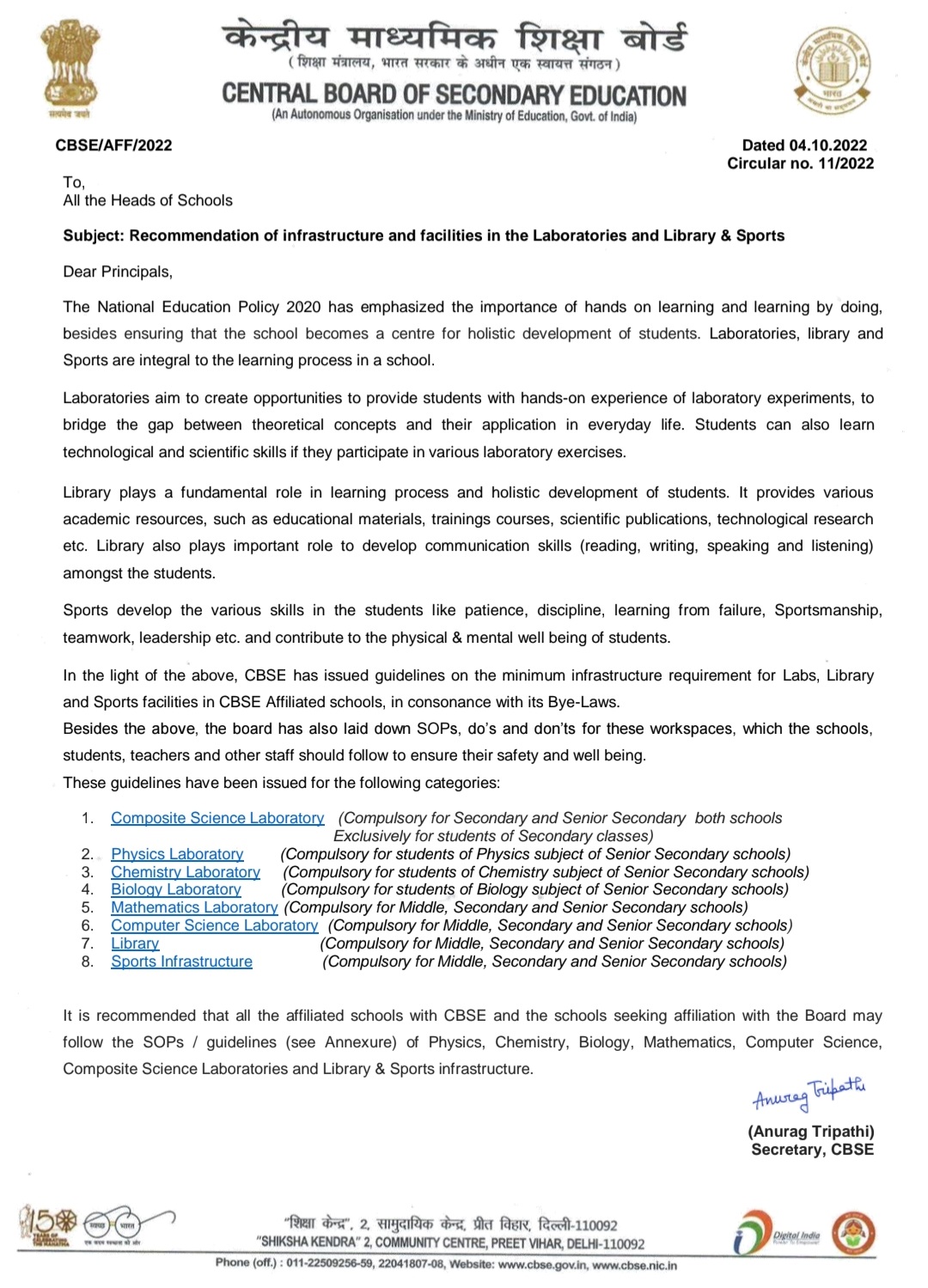
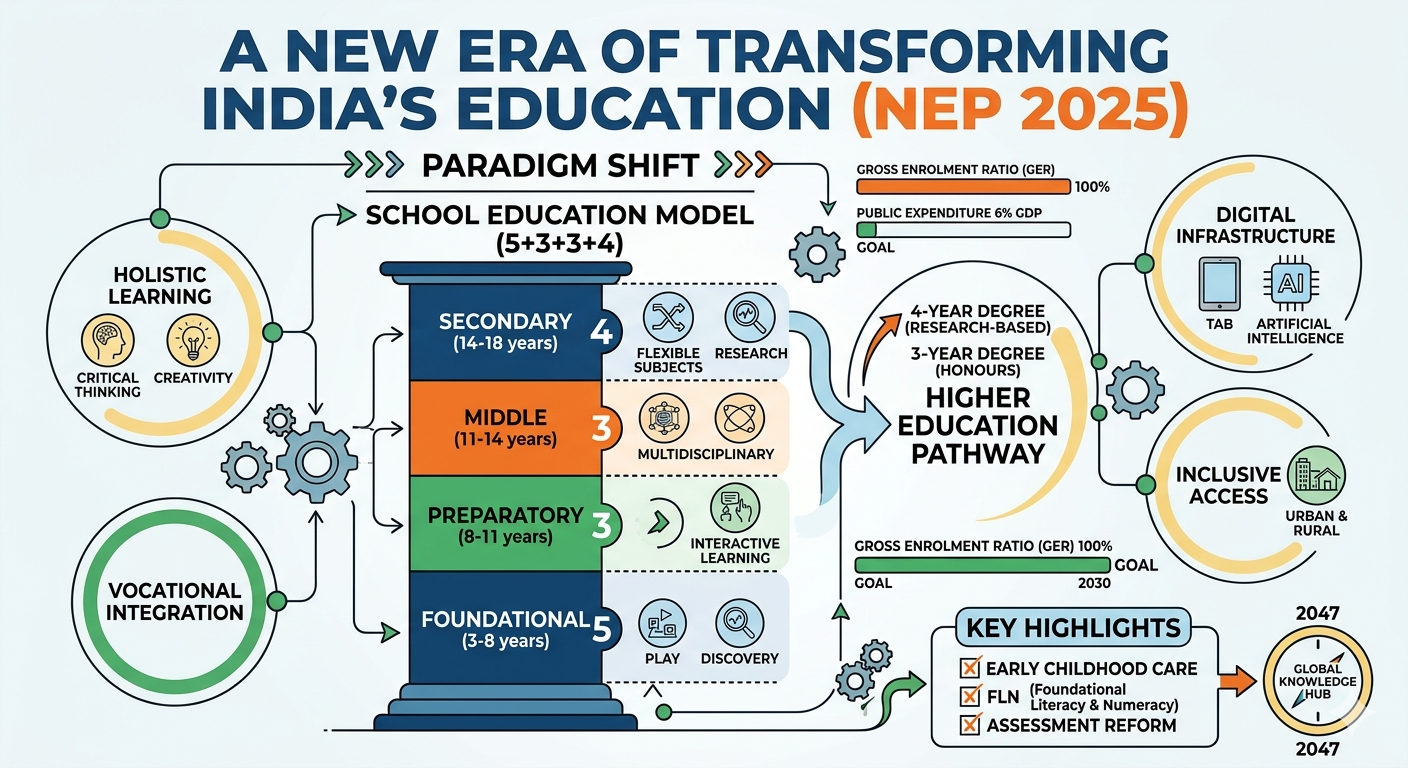
The Central Board of Secondary Education has issued a comprehensive circular setting clear guidelines on the minimum infrastructure required for laboratories, libraries, and sports facilities in its affiliated schools. This initiative supports the goals of the National Education Policy 2020, which promotes practical learning and the overall development of students.
In its directive, CBSE emphasized that laboratories are essential for experiential learning. Properly equipped labs enable students to perform experiments, understand concepts more effectively, and connect classroom learning with real-world applications. This hands-on approach also helps in developing scientific thinking and technical skills among learners.
The circular further highlights the importance of school libraries as key academic resources. Libraries not only provide access to books and digital content but also foster independent learning and strengthen communication skills such as reading and writing. They play a vital role in nurturing curiosity and academic growth among students.
Recognizing the importance of physical education, CBSE has also made sports infrastructure a priority. Participation in sports is seen as crucial for developing discipline, teamwork, leadership qualities, and maintaining both physical and mental health.
The board has made several facilities compulsory across different school levels, including science laboratories (Physics, Chemistry, Biology), composite science labs, mathematics and computer science labs, library resources, and proper sports infrastructure. These requirements apply to both existing CBSE schools and those seeking affiliation.
Additionally, CBSE has introduced Standard Operating Procedures (SOPs) and safety guidelines for the use of these facilities. Schools must ensure compliance to maintain a safe and productive learning environment for students and staff.
Through this move, CBSE aims to bring uniformity in educational infrastructure and enhance the quality of learning across schools. The guidelines are expected to strengthen a more practical, inclusive, and well-rounded education system in the country.