Connect with us

Entertainment

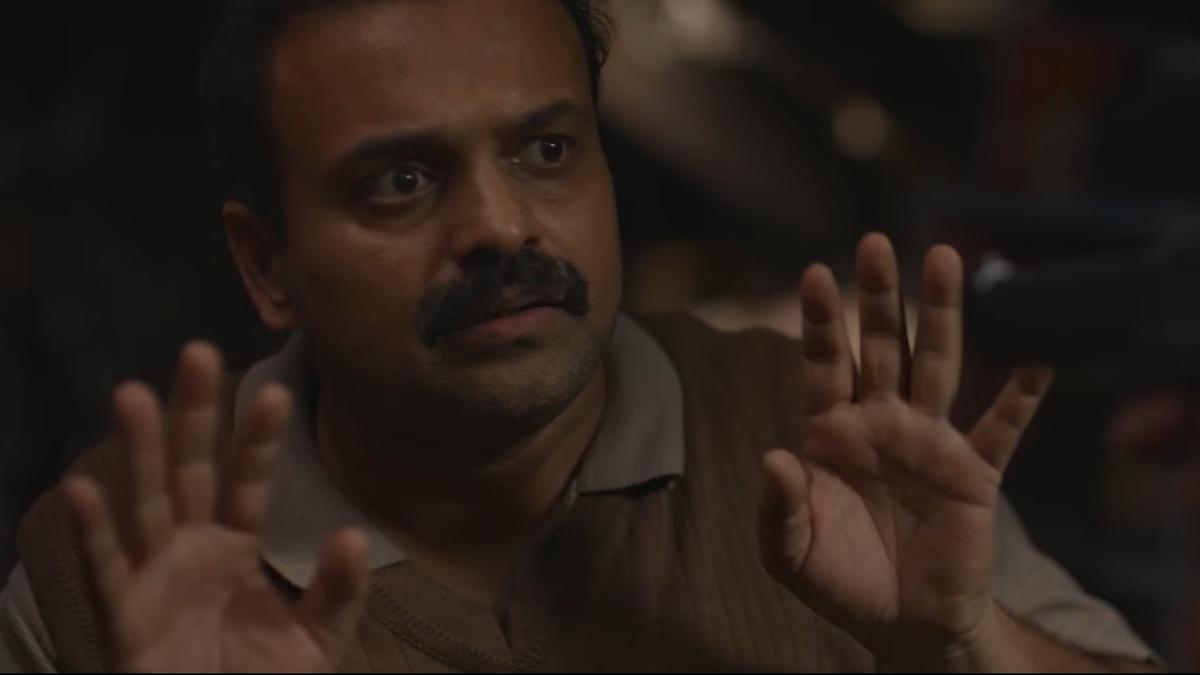
‘Oru Durooha Saahacharyathil’ movie review: Falters after a glorious opening hour
Published

on

The distinctive brilliance of Ratheesh Balakrishnan Poduval’s most accomplished works is often underscored by an impeccable sense of rhythmic narrative. Emulating a masterful storyteller in full command, he deftly constructs plots brimming with intriguing incidents and punctuates them with witty, often understated, humor. This captivating approach ensures an unwavering audience focus, sustaining engagement even when individual comedic moments might not land with full impact, allowing viewers to willingly surrender to the unfolding story.

However, the delicate equilibrium of this narrative artistry visibly wavers when his characteristic rhythm falters. This disruption is acutely felt in the final act of Oru Durooha Saahacharyathil, where the narrative’s earlier coherence gives way to a discernible decline. Here, the experience transitions from immersive storytelling to an almost inevitable sense of narrative discord. A primary factor in this cinematic deviation appears to be the film’s erratic narrative progression, particularly a sudden, jarring character transformation in the concluding segments. This abrupt shift feels less like a natural culmination of the story’s organic development and more akin to an unearned dramatic contrivance, ultimately undermining the integrity of the preceding events.

Md Mudassir Siddiqui is a distinguished computer science expert with a robust background in cutting-edge research and scholarly pursuits. As a research specialist, he has made significant contributions to the field, exploring innovative technologies and their applications. A passionate media enthusiast, Mudassir brings a creative flair to his work, with a specialized focus on new media. His expertise spans digital platforms, emerging media trends, and interdisciplinary projects that bridge technology and communication.

Entertainment

‘Balls Up’ movie review: Mark Wahlberg and Sacha Baron Cohen cannot save this dour exercise

Published

on

The transition back into professional duties following a vacation invariably calls for a gentle re-entry. Ideally, the first assignment should possess an engaging quality, perhaps even a spark of the extraordinary, to smoothly re-acclimate one’s focus, much like a captivating narrative might effortlessly draw a reviewer into their task.

Into this desired scenario stepped “Balls Up,” a film that, on paper, presented itself as an ideal candidate. Helmed by one half of the acclaimed Farrelly Brothers—a name synonymous with comedic hits like Dumb and Dumber, There’s Something About Mary, and Shallow Hal—and starring Mark Wahlberg, the premise of an unlikely pair navigating a series of misadventures in picturesque settings seemed poised for success, offering a promising escapist comedy.

Yet, the actual cinematic experience proved to be profoundly anticlimactic. Far from delivering the anticipated laughs, the movie descended into an abyss of unfunny gags, leaving a viewer not merely entertained, but rather grappling with a pervasive sense of profound disappointment, bordering on existential weariness.

Continue Reading

Entertainment

‘Toaster’ movie review: Rajkummar Rao shoulders a laborious dark comedy

Published

on

Rajkummar Rao’s emergence in the early 2010s marked a distinctive chapter in Indian cinema, as he infused his roles with a formidable intensity. His performances masterfully combined raw realism with a remarkable ability to explore the nuanced edges of human emotion. Whether portraying the relentless conviction of a young advocate in *Shahid* (2012), the profound desperation of a fledgling migrant worker in *Citylights* (2014), or the understated integrity of an election officer in *Newton* (2017), Rao consistently brought to life familiar, everyday individuals who often remained overlooked amidst the cinematic clamor. His filmography, defying easy genre categorization, established him as a significant presence in parallel, character-driven narratives.

More recently, however, the actor has diversified his oeuvre towards more popular productions. While he still embodies an “underdog spirit” through his portrayal of middle-class men in situational comedies, a certain distinctiveness has begun to fade. His once-revelatory performances now tend to lean on a more conventional arsenal of comedic tropes, rather than groundbreaking character interpretations.

This evolving trend is evident in *Toaster*, his latest dark comedy, which also marks his debut as a producer. In the film, Rao steps into the shoes of Ramakant, a parsimonious individual whose extreme obsession with frugality propels him towards increasingly dubious actions.

Residing in a charming Mumbai society with his wife Shilpa (Sanya Malhotra), Ramakant meticulously tracks every single expenditure. His world is naturally upended when a wedding invitation arrives, and Shilpa insists on purchasing an extravagant toaster as a gift.

When the wedding unexpectedly falls through, Ramakant’s immediate resolve is to reclaim the toaster and return it for a refund. What follows is a series of escalating misadventures, transforming the mundane kitchen appliance into a repository of a powerful politician’s illicit secret. Directed by Vivek Daschaudhary, this 120-minute Hindi feature stars Rajkummar Rao, Sanya Malhotra, Archana Puran Singh, Abhishek Banerjee, Jitendra Joshi, and Upendra Limaye.

The premise establishes a classic framework for a comedy of errors, and the film largely succeeds in eliciting laughter, albeit through a rather predictable screenplay. Much of the humor is derived from Rao’s spirited portrayal and sharp dialogue delivery, particularly in the first half as he meticulously attempts to retrieve the toaster while concealing his actions from Shilpa, who, sensing something amiss, initiates her own investigation.

The script, however, largely remains superficial, treading safe narrative paths. Its comedic elements primarily serve to prolong the running gag of Ramakant’s avarice, rather than to imbue the plot with deeper significance. Nevertheless, it manages to deliver a few genuinely amusing sequences, such as Ramakant’s audacious funeral speech for his landlord, where he falsely claims a prior discussion about rent reduction. Another notable moment of absurdity unfolds when Abhishek Banerjee’s stoner character comically fails to recognize a burqa-clad Ramakant during a clandestine attempt to retrieve the toaster.

Despite these intermittent laughs and chaotic developments, the film struggles to foster genuine audience investment in Ramakant’s character. A jarring, perverse twist at the midpoint causes the narrative to nearly unravel, leaving little in its wake to salvage the plot. Even Rao’s once-charming antics eventually become predictable, losing their novelty as he attempts to steer the disjointed events. Ultimately, beneath its veneer of humor, *Toaster* lacks any profound thematic message or lasting resonance. The choice to disregard the vibrant Mumbai setting, which could have powerfully amplified Ramakant’s miserly characteristics, instead results in a rather generic backdrop.

Consequently, the film heavily leans on the collective credibility of its ensemble cast to maintain any semblance of relevance. Unfortunately, Sanya Malhotra’s character, Shilpa, is significantly underutilized, designed with a remarkably diminished stake in the unfolding events.

Continue Reading

Entertainment

Bharatanatyam dancer-scholar Indumati Raman’s new book turns the spotlight on Marathi Yakshaganams

Published

on

In 2017, Bharatanatyam exponent and dance critic Indumati Raman published her first book Bhagavata Mela: My Tryst With Tradition. It focused on Bhagavata Mela, the temple dance-theatre tradition practised and performed by male Brahmins from Thanjavur district of Tamil Nadu. Her study of the subject also led her to explore the world of Marathi Yaksaganams in her book Dance-Theatre By Thanjavur Maratha Rajas (Motilal Banarsidass Publishing House).

“Thanjavur is a religious, linguistic and cultural centre since the time of the Cholas. The Maratha dynasty took over Thanjavur and reigned for two centuries after the Nayaks. This era, 1676-1855, shone with artistic radiance unmatched by any royal dynasty,” says Indumati, adding that despite their immense contribution to literature, music and dance, the history of the Thanjavur Marathas remains largely neglected in modern discourse. “The book aims to bring their sophisticated multi-lingual heritage back into the spotlight,” she says.

Continue Reading

Trending