Connect with us

Entertainment

‘Paradise’ Season 2 finale review: Post-apocalyptic drama takes a messy turn into sci-fi territory

Published

on

The second season of Paradise embarks on an ambitious tightrope walk, striving to immerse its audience in the profound, tragic solitude of a post-apocalyptic world, while simultaneously delivering the high-stakes thrills characteristic of a sophisticated sci-fi drama. This broad narrative scope inevitably leads to a finale brimming with unresolved conflicts, creating an impression of impatience as it clearly prioritizes setting the stage for its subsequent installment.

True to creator Dan Fogelman’s distinctive narrative style, which frequently employs temporal shifts, the season’s concluding episode commences with a crucial flashback. This sequence swiftly introduces ‘Alex,’ an advanced AI supercomputer commissioned by Bunker chief Samantha Redmond (Julianne Nicholson), notable for its chillingly accurate predictive capabilities.

Back within the bunker, the meticulously maintained social structure teeters on the brink of collapse, threatened by the dual pressures of an impending siege from outside survivors and an internal jailbreak orchestrated by dissident rebels. The episode, aptly titled ‘Exodus,’ largely unfolds without major surprises, a testament to Fogelman’s careful placement of narrative clues throughout the season. However, the pacing falters noticeably in the final stretches. While Paradise generally excels through its deliberate, almost deceptive patience, skillfully leveraging quieter moments to propel the story forward, the finale appears to rush when precision is most vital.

The second season of Paradise, created by Dan Fogelman, comprises eight episodes, each approximately 45-50 minutes in length. It features a robust ensemble cast including Sterling K. Brown, Julianne Nicholson, Sarah Shahi, Nicole Brydon Bloom, Aliyah Mastin, Percy Daggs IV, Krys Marshall, Enuka Okuma, Charlie Evans, and notable guest appearances by Shailene Woodley and Cameron Britton. The overarching storyline follows Xavier Collins’ perilous cross-country journey through a fractured, post-apocalyptic America in search of his wife, Teri, against the backdrop of rapidly deteriorating conditions within the Colorado bunker.

The seven episodes leading up to the finale deftly track Agent Xavier Collins (Sterling K. Brown) on his survivalist trek across multiple states, while also entangling Redmond in a complex political espionage thriller of her own making, and vividly portraying the struggling communities of outside survivors. Paradise largely navigates these diverse threads with impressive agility. Yet, the finale buckles under the weight of its ambitions, attempting to orchestrate the Collins family reunion, resolve two distinct armed rebellions, and introduce a looming nuclear catastrophe—all at once. This results in a frantic rush, leaving the audience breathless as the camera struggles to keep pace with the overflowing plotlines.

A formidable acting ensemble, led by Sterling K. Brown and augmented by compelling guest roles from Shailene Woodley and Cameron Britton, has consistently powered the series. The cast adeptly navigated a script that proved equally versatile in shifting genres. Nevertheless, even their collective talent seemed challenged by the task of executing an episode so overtly geared towards establishing the next season. The second season of Paradise concludes, characteristically for Fogelman, on a dramatic cliffhanger, a signature move designed to perpetually keep audiences on edge. The series has distinguished itself through its willingness to explore a multitude of genres, successfully weaving a narrative tapestry that is both diverse and remarkably cohesive. While a more measured and conclusive finale would have undoubtedly been welcomed, Paradise appears poised for what promises to be an exhilarating final season.

Both seasons of Paradise are available for streaming on JioHotstar.

Md Mudassir Siddiqui is a distinguished computer science expert with a robust background in cutting-edge research and scholarly pursuits. As a research specialist, he has made significant contributions to the field, exploring innovative technologies and their applications. A passionate media enthusiast, Mudassir brings a creative flair to his work, with a specialized focus on new media. His expertise spans digital platforms, emerging media trends, and interdisciplinary projects that bridge technology and communication.

Entertainment

‘The Drama’ movie review: Zendaya and Robert Pattinson glitter and jitter in crackling, edgy romance

Published

on

The initial chapters of this narrative introduce Emma (portrayed by Zendaya) and Charlie (played by Robert Pattinson), a seemingly quintessential couple whose journey commences with a charming “meet-cute” at a vibrant New York City cafe. Their romance unfolds like a perfectly crafted fairytale: a delightfully uninhibited first date where authentic emotions surface, an impulsive post-midnight kiss within the hallowed halls of a Manhattan museum, and a heartfelt marriage proposal whispered intimately. This foundation appears to be the ideal prelude to an unforgettable wedding day speech, mirroring the great love stories of cinematic history. Yet, this wholesome promise, alluded to in the early segments of ‘The Drama,’ soon gives way as unsettling realities begin to surface. It is no mere coincidence that the book Emma is reading during their first encounter, a title Charlie feigns familiarity with, is called ‘The Damage.’ This subtle foreshadowing quickly intensifies as an explosive secret from Emma’s past detonates during a pivotal conversation, causing the collapse of their shared intimate dream, echoing the disillusionment often associated with the American dream. What starts as deeply personal rapidly spirals into something complexly political and profoundly messy. This, it becomes clear, is far from an ordinary love story.

Norwegian filmmaker Kristoffer Borgli masterfully orchestrates the film’s opening moments with a deliberate, frenetic dissonance. He employs sublime jump cuts to navigate between timelines, instilling a palpable sense of jarring unease within Emma and Charlie’s ostensibly idyllic romance. This breathless juxtaposition not only heightens tension but also generates a distinct vein of humor, a testament to both the precise placement of these cuts and the razor-sharp wit embedded in the dialogue. Borgli’s directorial hand ensures that even in their most tender interactions, an underlying current of anxiety ripples through the narrative.

A significant shift in the film’s tempo occurs only after Emma’s secret is unveiled, prompting Borgli to introduce a rare sense of calm to the screenplay. This is most evident in one of the film’s longest sequences, set in a restaurant and unfolding over several bottles of wine, in the company of Charlie’s friend Mike (Mamoudou Athie) and his partner Rachel (Alana Haim). The conversation fluidly transitions to each person recounting the worst actions they’ve committed in their lives. Under pressure, a visibly inebriated Emma is compelled to share a disturbing chapter from her past: a fifteen-year-old self who harbored fantasies of perpetrating a mass shooting at her school. Predictably, this revelation dramatically alters the emotional landscape, triggering a fundamental shift in the characters’ tones and redirecting the film’s overarching trajectory.

Borgli is no stranger to such profound tonal shifts, having previously explored off-kilter, absurdist, and surreal territories in his acclaimed works ‘Sick of Myself’ (2022) and ‘Dream Scenario’ (2024). With ‘The Drama,’ he constructs an exceptionally audacious premise. On one hand, the film intricately mirrors universal interpersonal anxieties: the true extent of one’s knowledge about a beloved partner, and the boundaries of acceptance for their past selves. Borgli deftly probes these concerns as a devastated Charlie confronts Emma with probing questions—about her gun fantasies, what prevented her from acting on them, and more. In these sequences, the film adopts a rigorous, almost documentary-like approach to delve into Emma’s psychology, offering insights into her experiences and those of countless others who grew up as wounded children in a fractured nation. This exploration is executed with remarkable sensitivity, seamlessly integrating with the evolving dynamics between Emma and Charlie, knowing precisely when to retreat from its ironic overlays and embrace a gaze of profound empathy.

Despite its strengths, there remains a sense of the unsaid, as Borgli predominantly employs political undertones to intensify the friction between the lovers. His focus appears to lean more towards political awareness rather than achieving genuine political consciousness, causing the entire ordeal to feel somewhat like an additional dimension to Emma’s complex psyche rather than a fully integrated critique. This incisive idea, brimming with potential, regrettably becomes somewhat muddled, perhaps missing the opportunity to deliver a similarly pressing impact as seen in films like Jordan Peele’s ‘Get Out’ (2017) and ‘Us’ (2019), or even Ryan Coogler’s ‘Sinners.’ These successful predecessors seamlessly leveraged popular genres to convey a far grander purpose.

Continue Reading

Entertainment

‘Frieren: Beyond Journey’s End’ season 2 review: The elven mage’s sophomore run is a patient reckoning with home and hearth

Published

on

The recent conclusion of two of 2026’s most anticipated weekly anime spectacles, occurring within days of each other, starkly highlighted their contrasting approaches. Jujutsu Kaisen concluded its third season with an explosive finale, a testament to MAPPA’s formidable studio-wide production capabilities. In parallel, Frieren: Beyond Journey’s End gracefully concluded its sophomore outing with the characteristic serenity and assuredness that has defined its narrative since inception, relying on its exceptional storytelling and the cumulative weight of its emotional journey. While some persistently lament the fantasy series’ perceived lack of the visceral impact that electrifies JJK enthusiasts, the millennial elf’s enduring wisdom lies in its profound understanding that conflict devoid of inner depth is merely superficial noise – a principle magnificently underscored throughout its latest season.

Season two embarks on a renewed expedition northward, with Frieren, Fern, and Stark venturing deeper into the Northern Plateau. This region presents a significantly more formidable landscape, characterized by inclement weather, denser populations of monstrous entities, and settlements whose very survival hinges on extraordinary collective resilience. The narrative retains its fundamentally episodic structure, yet each encounter contributes deliberately to a larger tapestry of growth and discovery. The trio crosses paths with formidable First-Class Mages, such as Methode and Genau, confronts new and cunning demonic adversaries, and navigates a series of smaller, deceptively profound narratives encompassing themes of outstanding obligations, the weight of remembrance, and the disillusionment of unmet expectations.

A particularly memorable episode ingeniously introduces the nascent legend of the Hero of the South, effectively re-contextualizing established notions of heroism. This figure achieves a decisive victory through profound self-sacrifice long before the arrival of Himmel’s fabled party, establishing ripples of foresight and inevitability that resonate powerfully into Frieren’s contemporary existence. The season gracefully unfolds through a series of similarly structured narrative fragments. Initially appearing self-contained, these episodes gradually begin to echo and reinforce one another, revealing a profound connective tissue that ultimately forms another moving meditation on the enduring choices individuals make regarding what memories and burdens they elect to carry forward.

The seamless coherence of these disparate narrative threads is fundamentally underpinned by the exceptional technical prowess of Studio Madhouse. Their animation here once again prioritizes clarity and fluidity, delivering breathtaking sequences of motion that convey profound weight, precise timing, and acute spatial awareness with remarkable finesse. The climactic multi-front demon confrontation against Revolte towards the season’s conclusion serves as a prime illustration of this masterful control. Each combatant pairing operates within distinct, instantly discernible tactical parameters, with the animation dynamically adjusting to fluidly shift between intimate, reactive choreography and expansive, strategic compositions, all without disrupting the narrative’s inherent rhythm.

Aesthetically, the anime’s meticulously rendered backdrops maintain their characteristic attention to minutiae, featuring expansive, picturesque skies and vibrant, life-filled forests. Simultaneously, subtle gestural details—such as the deliberate handling of objects or the momentary pause preceding an action or expression—are imbued with as much narrative intent as any grander set piece. Complementing this visual splendor, Evan Call’s perennially resonant musical score continues to intricately shape the series’ emotional landscape, weaving his evocative motifs through scenes, thus imbuing memory with a potent sonic dimension. Recurring themes associated with Himmel or the overarching journey subtly resurface in modified arrangements, reflecting Frieren’s evolving comprehension, while newly composed pieces ingeniously expand the world, lending a sense of continuity even to transitional moments.

If there exists a foundational concept unifying this latest season, it is undeniably the profound assertion of home as an enduring entity, one that persists and holds significance even when confronted by threats, reduced in scope, or rendered practically unattainable.

Continue Reading

Entertainment

‘Jo Nesbø’s Detective Hole’ series review: A welcome return to Nordic noir

Published

on

After a string of less-than-stellar adaptations, one might understandably approach the new series, Jo Nesbø’s Detective Hole, with a degree of caution. Previous attempts, such as the critically panned Scarpettamisfire and the disappointing 2017 film adaptation of The Snowman—despite featuring Michael Fassbender as Nesbø’s tormented Oslo detective—had set a precedent for apprehension.

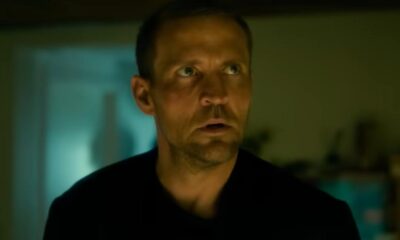
However, this Norwegian series, a compelling nine-episode saga, reintroduces viewers to Detective Harry Hole (Tobias Santelmann) with remarkable success. Created by Jo Nesbø himself, who also serves as writer and showrunner, this inaugural season is based on the fifth Harry Hole novel, The Devil’s Star (2003). Clocking in with episodes ranging from 43 to 62 minutes, it delivers a narrative that is both propulsive and intellectually sharp, ultimately doing justice to its gritty source material. The central storyline follows a troubled Oslo detective as he navigates a complex investigation into a serial killer, all while contending with a corrupt colleague.

Nesbø has often quipped that one of the liberties of adapting one’s own work is the freedom to disregard its original form. Yet, his directorial involvement ensures an exceptional translation of a dense novel into an absorbing series. This includes retaining the meticulous forensic details crucial to solving the cases. While largely faithful, the adaptation does feature one seemingly gratuitous killing that feels inexplicably tacked on.

The series masterfully weaves in elements from earlier Harry Hole books—specifically The Redbreast (2000) and Nemesis (2002)—to establish the protagonist’s complex backstory. The narrative opens with mercurial Detective Harry Hole (Tobias Santelmann) in relentless pursuit of a perpetrator involved in a string of violent bank robberies across Oslo. This chase tragically culminates in a death, plunging Harry into a deep abyss of despair, where he seeks solace at the bottom of a bottle. Five years later, Harry is portrayed as a high-functioning alcoholic, his life further complicated by the brutal murder of his closest friend and partner, Ellen (Ingrid Bolsø Berdal), during an arms smuggling investigation that hints at the involvement of high-ranking police officials.

Harry’s suspicions immediately fall upon the ambitious and ruthless policeman, Tom Waaler (Joel Kinnaman). Lacking concrete evidence, however, the police establishment is unwilling to act against one of their own. The scene is set during an unusually sweltering summer, when the majority of the police force is on vacation. Three seemingly unrelated murders send shockwaves through Oslo. Despite having received a termination notice for his drunken conduct at work, Harry’s unique insights into the cases compel the chief of police to reinstate him, even as Tom Waaler leads the official investigation. Harry embarks on a turbulent journey through a labyrinth of suspicion, grief, self-loathing, and doubt, as both ongoing investigations converge dramatically amidst a violent storm that finally breaks the oppressive heat.

Across the nine episodes, viewers are invited into the shadowy corners of Harry’s world, gaining insight into his eclectic views on subjects ranging from The Doors (“the most overrated band in history”) to elevators and diving. His fragile relationship with Rakel (Pia Tjelta) and her son, Oleg (Maxime Baune Bochud), introduces a tender human layer to a character otherwise consumed by self-destruction. Santelmann’s portrayal of Harry’s fractured brilliance and Kinnaman’s embodiment of Tom’s insidious menace establish them as formidable adversaries, delivering compelling performances.

The series features a truly exceptional soundtrack, blending timeless classics like Donovan’s ‘Season of the Witch,’ The Ramones’ ‘I Wanna Be Sedated,’ and ‘The End’ by The Doors with fresh, contemporary sounds. Nesbø’s own background as the lead vocalist and lyricist for a successful Norwegian rock band subtly permeates the show, notably in a tense sequence where Harry and a suspect bond over Iggy Pop songs starting with the letter ‘C’.

Nesbø has consistently emphasized Oslo’s integral role in the narrative, portraying it as more than just a backdrop. This is powerfully conveyed through breathtaking aerial shots, distinctive architectural elements, and expansive cityscapes that make the Norwegian capital feel like a living, breathing character within the story.

Continue Reading

Trending