Connect with us

Admissions

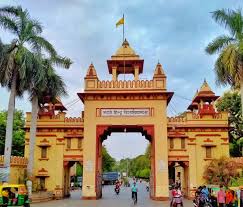
BHU PG Admission 2025: अब एक ही कोर्स की सीट लॉक कर सकेंगे छात्र, विश्वविद्यालय ने जारी की नई गाइडलाइन

Madhuyanka Raj

Published

on

पिछले वर्ष की गड़बड़ियों को ध्यान में रखते हुए, बनारस हिंदू विश्वविद्यालय (BHU) ने अपने पीजी प्रवेश प्रणाली में महत्वपूर्ण बदलाव कर दिया है। अब छात्र कुल एक ही कोर्स की सीट लॉक कर पाएंगे। इसका उद्देश्य सीट्स को फंसाकर रखने की प्रवृत्ति को रोकना है, जिससे प्रवेश प्रक्रिया सुचारू हो सके और सीटें बेवजह ब्लॉक न हों

यह बदलाव CUET‑PG में एक से अधिक कोर्स में उत्तीर्ण होने वाले विद्यार्थियों के लिए लागू किया गया है, क्योंकि पिछले साल छात्र एक से अधिक सीट लॉक कर देते थे, लेकिन अंत में केवल एक कोर्स में ही प्रवेश लेते थे। इससे विश्वविद्यालय को अतिरिक्त राउंड कराने पड़ते थे, जिसकी वजह से प्रवेश प्रक्रिया में देरी होती थी। नई व्यवस्था यह सुनिश्चित करती है कि एक ही कोर्स चुना जाए और अन्य विकल्प स्वतः डिसेबल हो जाएं।

इसके साथ ही, यदि कोई छात्र ठीक से सीट चुनने के बाद बाद में कोर्स बदलना चाहता है, तो उसे पहली लॉक की गई सीट रद्द कर उस अवधि में दूसरी सीट सुरक्षित करनी होगी। यह विकल्प ऐसे मामलों के लिए खोला गया है जहां किसी छात्र को गलत चयन होने की संभावना हो

दो दिन की अवधि में लगभग तीन हजार छात्रों ने पहले ही अपनी सीटें लॉक कर फीस जमा कर दी है। सीट लॉकिंग की प्रक्रिया सोमवार दोपहर 12:40 बजे से शुरू हुई और बुधवार रात 11:59 बजे तक चली। इस दौरान फीस जमा कर सीट निश्चित करनी थी, वरना छात्र अगली राउंड में शामिल नहीं हो पाएंगे

संक्षेप में, BHU का यह कदम प्रवेश प्रणाली को और अधिक सुव्यवस्थित, निष्पक्ष और समयबद्ध बनाने की दिशा में एक स्पष्ट प्रयास है। यह सुनिश्चित करेगा कि सीट आवंटन में देरी न हो और सभी योग्यता प्राप्त छात्रों को एक न्यायसंगत मौका मिले।

Madhuyanka Raj is a poet, writer, and journalist whose work bridges the worlds of literature and contemporary reportage. With a voice rooted in both lyrical introspection and investigative clarity, Madhuyanka has published poetry in acclaimed literary journals and contributed features, essays, and reportage to a range of national and international publications. Their writing explores themes of identity, social justice, and the human condition, often blending narrative depth with poetic nuance. Madhuyanka is passionate about telling stories that challenge, illuminate, and inspire. When not chasing a deadline or crafting verse, they often speak at literary festivals and lead workshops on creative writing and journalistic integrity.

Admissions

Critical Analysis: CBSE Class 10 Science Paper 2026 – NCERT-Aligned and Moderately Challenging

Rohan Priyadarshi

Published

on

The CBSE Class 10 Science exam on February 25, 2026, was rated easy to moderate overall, with a strong emphasis on NCERT concepts across Biology, Chemistry, and Physics. Students who focused on textbooks, examples, diagrams, and PYQs found it scoring, though Physics numericals and case studies demanded careful time management.

Strengths Across Sections

The 39-question paper (80 marks) balanced MCQs, assertion-reason, short/long answers, and case-based items, aligning perfectly with the sample paper pattern. Biology (Section A, 30 marks) emerged easiest, covering life processes, reproduction, and heredity with direct, conceptual queries. Chemistry (Section B, 25 marks) stayed theoretical and straightforward on reactions, acids/bases, and carbon compounds.

Physics (Section C, 25 marks) posed moderate challenges via electricity numericals, light ray diagrams, and magnetic effects, testing application over recall. Competency-based questions encouraged logical thinking without major surprises.

Key Critiques and Challenges

While NCERT fidelity rewarded thorough preparation, some case studies required meticulous reading, and Physics calculations ate into time for slower students. No out-of-syllabus content surfaced, but tricky MCQs in Physics tested deeper principles. Experts noted high expected scores (70+ for prepared candidates), yet average performers might cap at 60 due to diagram accuracy and numerical precision.

Section-Wise Breakdown

Section Marks Key Topics Difficulty Critique
A (Biology) 30 Life processes, control/coordination, reproduction, heredity Easy Student-friendly; direct NCERT pulls
B (Chemistry) 25 Reactions, acids/bases/salts, metals/non-metals, carbon compounds Easy-Moderate Theoretical focus; minimal tricks
C (Physics) 25 Light/refraction, electricity, magnetic effects, environment Moderate Numerical/diagram heavy; time-intensive

Implications for Students and CBSE

This paper reinforced NEP’s competency shift, favoring conceptual clarity and application, with Biology/Chemistry boosting confidence and Physics ensuring rigor. Time sufficiency aided completion, but future iterations could ease Physics load for equity. Well-prepared students likely aced it, signaling NCERT mastery as the gold standard.

Continue Reading

Admissions

Bihar BET 2026 Notification Soon: Eligibility, Exam Pattern & Application Guide for Aspiring Professors

Rohan Priyadarshi

Published

on

Bihar Eligibility Test (BET) 2026: Complete Guide to Notification, Eligibility, Exam Pattern & Application Process
Patna, February 16, 2026 – The Bihar Eligibility Test (BET) 2026 is set to become a game-changer for aspiring Assistant Professors in Bihar’s degree colleges, mirroring the UGC NET format to streamline faculty recruitment. With notifications expected by March-April 2026, thousands of postgraduates are gearing up for this state-level exam conducted by the Bihar School Examination Board (BSEB) or higher education authorities.

As Bihar addresses long-pending vacancies in higher education, BET promises a fair, standardized eligibility check. Here’s everything candidates need to know.

What is Bihar Eligibility Test (BET)?
BET determines eligibility for Assistant Professor roles in government and aided colleges across Bihar. Unlike school-level TETs (now shifting to mandatory CTET), BET targets higher education, covering 30+ subjects like Commerce, Economics, History, Law, and Chemical Sciences.

Launched amid delays in professor appointments, it aligns with UGC guidelines, making qualifiers eligible for future vacancies without repeated national exams.

Eligibility Requirements
Educational Qualification: Postgraduate degree with 55% marks (50% for SC/ST/OBC/PWD). NET/SLET/SET/PhD holders get exemptions or preferences.

Age Limit: Up to 37-40 years (general); relaxations: +3 years OBC, +5 years SC/ST/Women. No upper limit for NET qualifiers in some cases.

Nationality: Indian citizens, preferably Bihar domicile.

Final-year postgraduates can apply provisionally.

Exam Pattern and Syllabus
BET follows a two-paper structure (300 marks total, 3 hours):

Paper 1: 50 MCQs on Teaching/Research Aptitude, Reasoning, Comprehension, DI (100 marks).

Paper 2: 100 MCQs on chosen subject (200 marks). No negative marking.

Syllabus mirrors UGC NET: Paper 1 emphasizes pedagogy; Paper 2 is subject-depth oriented (e.g., Mathematical Sciences, Geography). Qualifying cutoff: 40% aggregate (relaxed for reserved categories).

How to Apply: Step-by-Step Process
Visit official site (biharboardonline.bihar.gov.in or dedicated portal).

Register with mobile/email.

Fill form, select subject/paper.

Upload photo, signature, certificates.

Pay fee online (₹960 General/OBC, ₹760 SC/ST, ₹500 PWD).

Applications expected online post-notification; keep documents ready (10th/12th/PG marksheets).

Key Dates and Latest Updates
Notification: March 2026 (tentative).

Application Window: April-May 2026.

Exam Date: June-July 2026.

Result: August 2026.

No official release as of Feb 16, 2026—track BSEB site. Note: Bihar TET scrapped; CTET now mandatory for school teachers.

Preparation Strategy for Success
Master UGC NET papers (free PDFs online).

Practice mocks daily; focus weak areas via coaching in Patna (e.g., local centers for BET/STET).

Resources: Subject books (Arihant), previous UGC NET questions.

Feature BET 2026 Expected UGC NET Comparison
Subjects 30+ (state-specific)
​ 80+ (national)

Duration 3 hours
​ Same
Fee ₹960-₹1440
​ ₹1150+
Validity Lifetime eligibility
​ Lifetime (post-2018)
Aspiring educators in Patna and beyond should start prepping now. For updates, follow BSEB and Bihar Education Dept portals. Success in BET opens doors to stable academic careers in Bihar’s expanding higher ed sector.

Continue Reading

Admissions

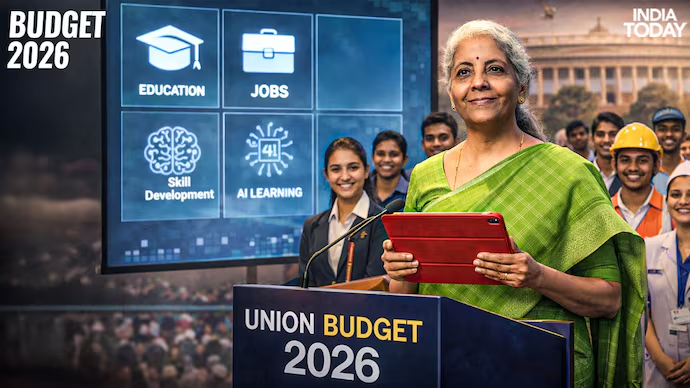
Union Budget 2026: A Boost for Education – More Money, New Schools, and Global Study Help

Rohan Priyadarshi

Published

on

The Union Budget 2026 delivers fantastic news for students, teachers, and parents nationwide. Finance Minister Nirmala Sitharaman announced these game-changing initiatives on January 31, focusing on linking education directly to real-world jobs. With a record-breaking budget increase and innovative programs, the plan aims to prepare India’s youth for leadership in AI, services, and global opportunities – a big win for ambitious families in Bihar chasing BPSC success, digital marketing careers, and wellness goals.

Record ₹1.39 Lakh Crore Allocation – Highest Ever, Up 8.2%

The government has poured a whopping ₹1.39 lakh crore into education for 2026-27, marking an 8.2% rise from last year’s ₹1.28 lakh crore – the largest amount in India’s history. This smart split ensures every level gets attention:

  • Schools: ₹83,561 crore (up 6.35%) to upgrade classrooms, hire more teachers, provide free textbooks, and improve midday meals for millions of kids.
  • Higher Education: ₹55,724 crore (up 11.28%) for better universities, research grants, and scholarships to attract top talent.
  • Skills Development: A sharp jump to ₹9,886 crore, funding hands-on training in high-demand areas like coding, healthcare, and hospitality.

This funding surge tackles dropout rates, rural gaps, and unemployment, directly benefiting Bihar’s young learners preparing for competitive exams and creative fields.

Special Committee to Bridge Studies and Jobs

A High-Powered Committee of experts will map education to employment needs in fast-growing sectors like IT services, healthcare, tourism, logistics, and e-commerce. The goal? Turn India’s $3.5 trillion economy into a $30 trillion powerhouse by 2047. Students will get curriculum tweaks, internships, and job fairs – ensuring no graduate sits idle. For Bihar’s political campaign managers and content creators, this means tailored courses in digital strategy and public relations.

Girls’ STEM Hostels in Every District Nationwide

To empower girls in science, technology, engineering, and math (STEM), one modern hostel will be built in every district with central funding up to ₹50 crore per project. These safe spaces will feature Wi-Fi, computer labs, sports areas, and counseling – cutting travel barriers and dropout risks. Expect 700+ hostels nationwide, housing 50,000+ girls annually and boosting female enrollment in IITs and tech firms.

Five University Townships: Education Meets Industry

Five sprawling “university townships” near industrial corridors and highways will integrate colleges, R&D labs, vocational centers, worker housing, and corporate offices. Covering 500+ acres each, they’ll offer degrees with built-in apprenticeships, slashing the skill-job gap. Ideal locations include Gujarat-Maharashtra belt and eastern growth hubs – potentially near Bihar for local youth in manufacturing and logistics.

Centre of Excellence in AI for Personalized Learning

A national AI hub will roll out cutting-edge tools: adaptive apps that customize lessons per student’s pace, virtual labs for chemistry/physics experiments without gear, and chatbots for homework help. Starting with 100 pilot colleges and 1,000 schools, it expands to personalize education for 10 crore students. Bihar students prepping for civil services or video production will gain a tech edge.

New National Institute of Design in Eastern India

A state-of-the-art National Institute of Design (NID) lands in eastern India (likely Bihar, Jharkhand, or Odisha), training 5,000 students yearly in fashion, graphic design, UI/UX, and animation. With ₹200 crore startup funds, it feeds India’s ₹1 lakh crore creative industry, creating jobs for poets, social media experts, and entrepreneurs in Patna’s digital scene.

AVGC Labs in 15,000 Schools – Animation, Gaming Boom

Partnering with IIT Mumbai, 15,000 secondary schools get AVGC (Animation, Visual Effects, Gaming, Comics) labs equipped with software, cameras, and mentors. Reaching 2 crore students, this sparks careers in India’s $20,000 crore AVGC sector – perfect for Bihar’s video editors, fitness influencers, and Hindi content creators making shayari reels.

National Institute of Hospitality Upgrade + 10,000 Guides Trained

The hotel management council transforms into a full National Institute of Hospitality, offering diplomas in culinary arts, event planning, and sustainable tourism. Additionally, 10,000 guides will train at iconic sites like Nalanda and Bodh Gaya – generating 50,000 jobs and tourism revenue for Bihar’s heritage economy.

Overseas Education Relief: TCS Slashed to 2%

Families sending kids abroad for higher education (degrees/diplomas) or medical studies save big: TCS under LRS drops from 5% to 2% on remittances over ₹10 lakh (up to USD 250,000/year). A ₹50 lakh transfer now costs ₹1 lakh less upfront – covering tuition, hostels, and living. Builds on 2025’s loan exemptions; claim excess via ITR.

Remittance Old TCS (5%) New TCS (2%) Savings
₹15 lakh ₹50,000 ₹20,000 ₹30,000
₹50 lakh ₹2.5 lakh ₹1 lakh ₹1.5 lakh

These initiatives make education practical, inclusive, and future-proof – empowering Bihar’s multi-talented youth in campaigns, wellness, and academics to shine globally.

Continue Reading

Trending