Education
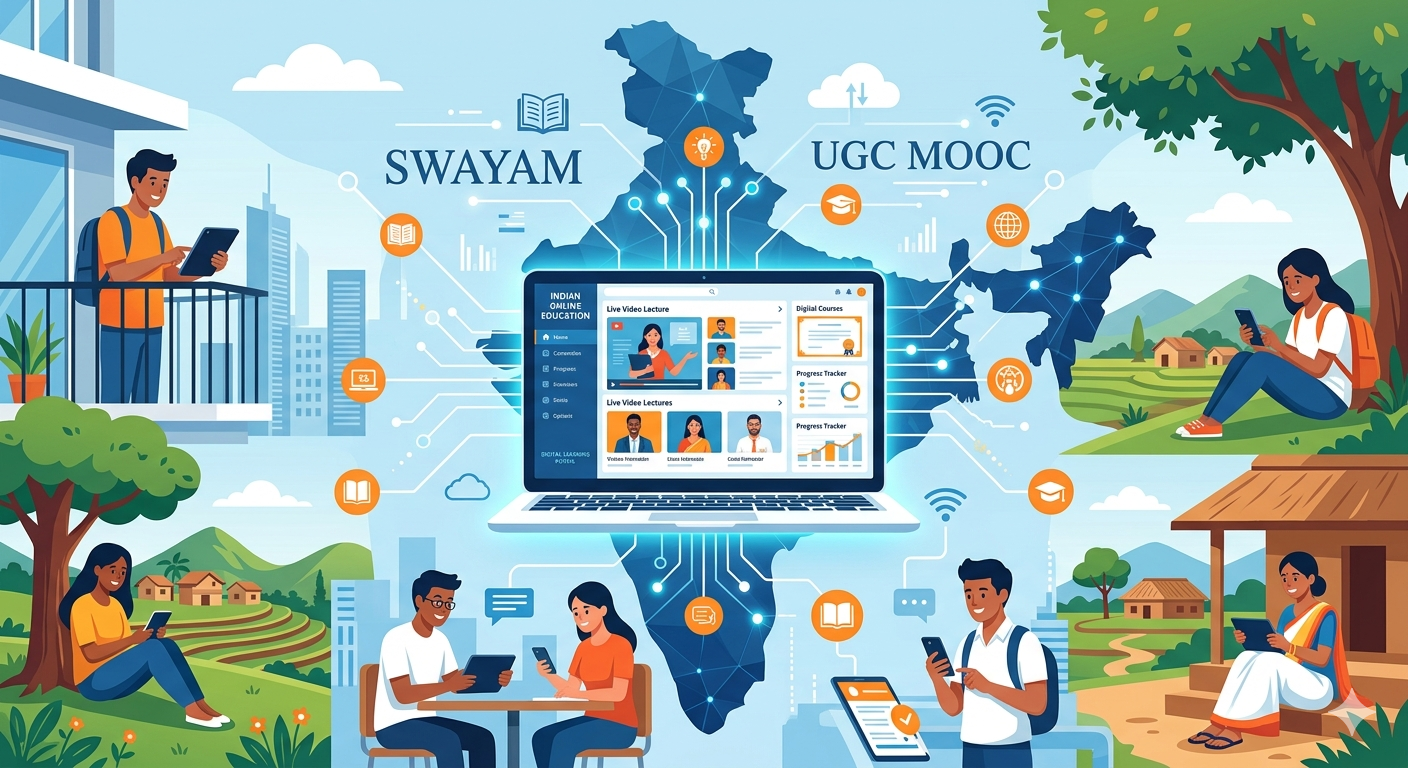
Anytime, Anyone, Anywhere: How SWAYAM and UGC MOOCs are Reshaping Learning
Published
2 hours agoon
Authored by Trainee Reporter: Adarsh
What is a MOOC?
A MOOC, which stands for Massive Open Online Course, is a web-based distance learning model designed to deliver educational content to anyone in the world, completely free of academic prerequisites or participation limits. First introduced in 2008 and exploding in popularity by 2012, MOOCs allow anyone with an internet connection to take structured courses developed by world-class universities and major tech companies without formal academic prerequisites.
Driven by the core philosophy of the “3As” (Anytime, Anyone, Anywhere), MOOCs effectively democratise higher education by breaking down geographic, financial, and institutional barriers.
Types of MOOC Licensing
Early MOOCs (cMOOCs: Connectivist MOOCs): Often emphasized open-access features, such as open licensing of content, structure and learning goals, to promote the reuse and remixing of resources.
Some later MOOCs (xMOOCs: extended MOOCs): Use closed licenses for their course materials while maintaining free access for students.
Global and Regional MOOC Platforms
There are various Global and Regional MOOC Platforms, such as:
Coursera (USA): Features over 16,000 corporate and academic courses from partner institutions, offering professional certifications, micro-credentials, and fully digital degree programs.
edX (USA): Founded by Harvard University and MIT, it hosts high-level academic content across diverse science, business, and humanities sectors.
SWAYAM (India): A national digital initiative by the Indian Government delivering free curated coursework where local students can earn recognized academic credits.
XuetangX (China): Founded by Tsinghua University, it serves as the largest localized open-education architecture in China with tens of millions of registered users.
FutureLearn (UK): A popular portal partnered with top European universities that emphasizes social learning elements and collaborative chat forums.
Pros and Cons of MOOCs
| Advantages | Disadvantages |
| Complete Flexibility: Allows learning on a self-paced schedule around work or parental duties. | Low Completion Rates: Research notes completion rates often drop below 5% due to a lack of structured, in-person discipline. |
| High Accessibility: Eliminates financial barriers and costly travel requirements for remote students. | Limited Instructor Feedback: Grading is usually automated or peer-reviewed rather than handled directly by professors. |
| Resume Boost: Provides direct, verifiable digital certificates that can be integrated into LinkedIn profiles. | Hidden Paywalls: While audit tracks remain free, securing final graded items and certified documents frequently requires payment. |
Understanding the University Grants Commission (UGC)
The University Grant Commission (UGC), is a Statuary Body of Government of India, Ministry of Education, Department of Higher Education, constituted under the University Grants Commission Act, 1956. It is vested with two responsibilities: that of providing funds and that of coordination, determination and maintenance of standards in institutions of higher education.
Key Details of UGC:
It provides recognition to universities in India, and disbursements of funds to such recognized universities and colleges.
Headquarters: New Delhi.
Regional Centres: Six centres located in Pune, Bhopal, Kolkata, Hyderabad, Guwahati and Bengaluru.
Future Proposal: However, a proposal to replace it with another new regulatory body called HECI is under consideration by the Government of India.
What is a UGC MOOC?
A UGC MOOC refers to Massive Open Online Courses developed under the University Grants Commission (UGC) of India. It is a specialized, university-level online courses developed under the University Grants Commission (UGC) of India. UGC MOOCs (Massive Open Online Courses) were created to democratize higher education in India by overcoming geographic and financial barriers.
Hosting on the SWAYAM Platform
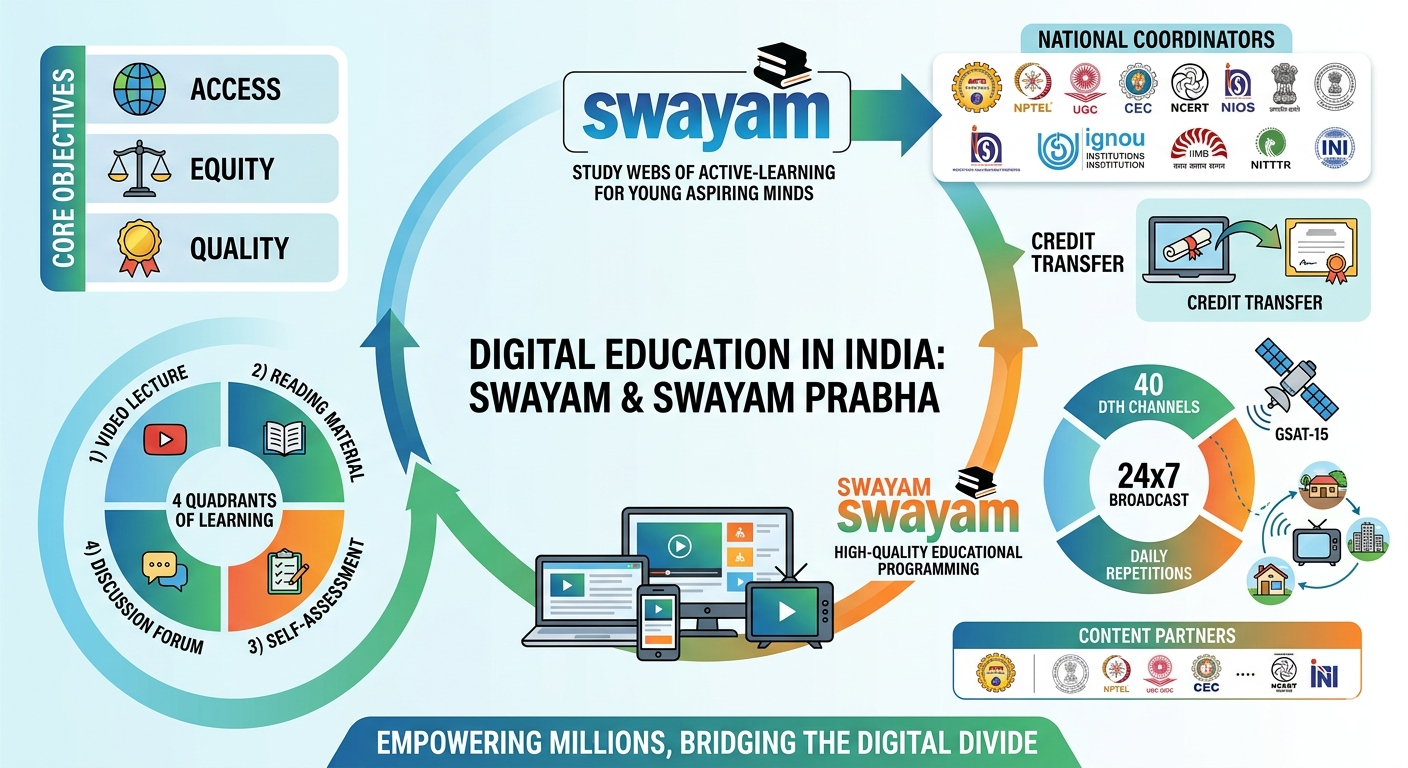
UGC MOOC is primarily hosted on the Government of India’s SWAYAM (Study Webs of Active-Learning for Young Aspiring Minds) digital platform.
Launch: SWAYAM, a programme spearheaded by the UGC and initiated by Government of India, was launched on July 9, 2017 by the Ministry of Human Resource Development to provide one integrated platform and portal for online courses.
Core Design: It is designed to achieve the three cardinal principles of Education Policy viz., access, equity and quality.
Objective: The objective of this effort is to take the best teaching learning resources to all, including the most disadvantaged.
Purpose: It provides free, high-quality learning resources designed to complement traditional university curricula, boost digital literacy, and support skill development.
The Need for UGC MOOCs in India
The need for UGC MOOCs in the Indian education system centers around several key objectives, such as:
Expanding Access and Equity: They ensure education reaches students in rural, remote, or underserved regions who cannot afford to attend premier brick-and-mortar universities.
Increasing Gross Enrolment Ratio (GER): By providing flexible, affordable, and scalable learning options, UGC MOOCs help increase the overall number of students successfully accessing higher education.
Industry-Relevant Skills: Many traditional university syllabi lag behind fast-moving industry trends. UGC MOOCs provide continuous education and technical skill courses that make graduates more employable.
Credit Transfer and Blended Learning: Aligned with the National Education Policy (NEP) 2020, they allow universities to adopt a blended learning model, letting students take online courses and transfer the credits directly to their formal degree programs.
Democratizing Expert Knowledge: They give learners open access to recorded lectures and study materials crafted by top professors from recognized central universities, ensuring a standardized, high-quality education for everyone.
Prachi Sharma is a dynamic journalist and anchor known for her insightful reporting and engaging on-screen presence. With a strong command over storytelling and a flair for content creation, she brings clarity and depth to every piece she presents. Prachi’s versatile skills extend beyond journalism—her ability to craft compelling written content makes her a valuable voice in the media landscape. Whether on camera or behind the scenes, she is committed to delivering impactful narratives that inform, inspire, and connect with audiences.

You may like


The Digital India Milestone: Transforming Classrooms with NCERT’s ePathshala
-
CBSE’s Three-Language Mandate: Balancing Policy Goals and Ground Realities
-
From Campus to Cloud: How SWAYAM is Democratizing Higher Education
-
CBSE Board Re-evaluation Process: Effects on Academic Performance and Student Confidence
-
Anatomy of a Compromised Exam: From a 400-Question ‘Guess Paper’ to a Nationwide Re-Test
-
Improving Educational Outcomes through Active Stakeholder Participation in Decision-Making in CBSE