Connect with us

Education

Bihar CET-B.Ed. 2026 Notification Released: Exam Dates, Eligibility, and Step-by-Step Application Guide

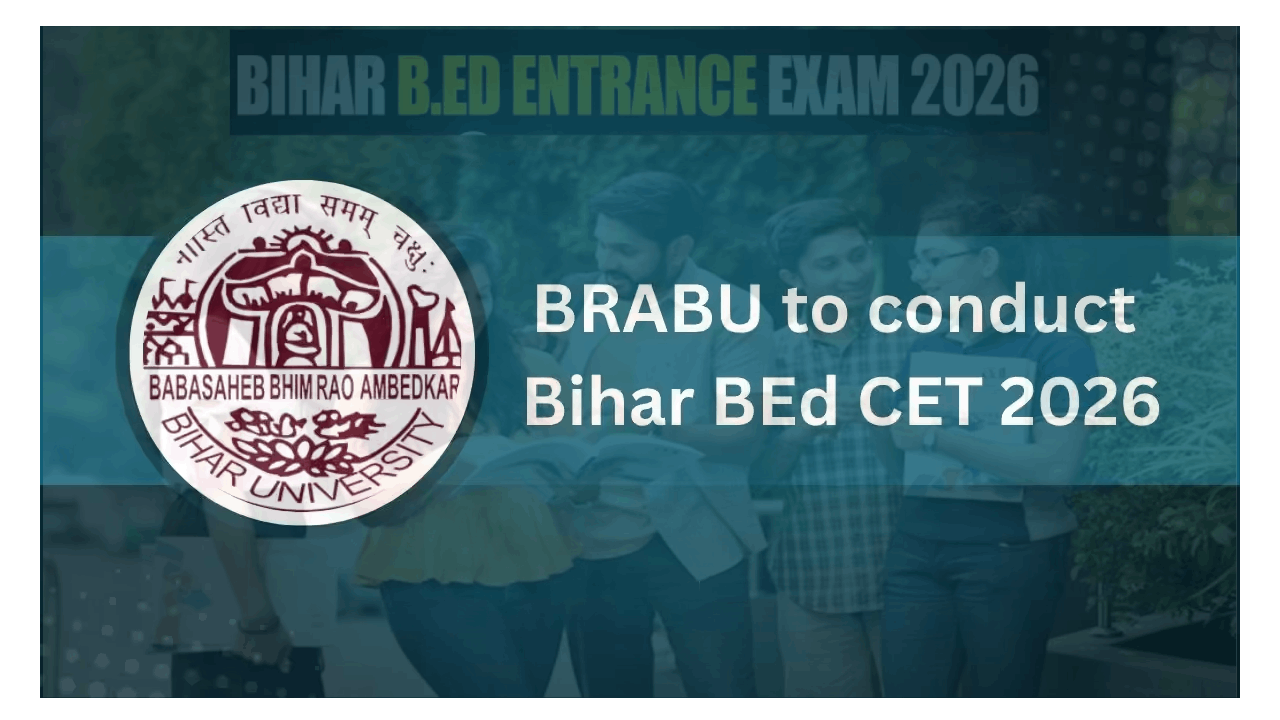
Babasaheb Bhimrao Ambedkar Bihar University (BRABU), Muzaffarpur, has been officially nominated by the Governor’s Secretariat as the State Nodal University to conduct the Bihar B.Ed. Combined Entrance Test (CET-B.Ed. 2026).
Published

on

Bed CET

Babasaheb Bhimrao Ambedkar Bihar University (BRABU), Muzaffarpur, has been officially nominated by the Governor’s Secretariat as the State Nodal University to conduct the Bihar B.Ed. Combined Entrance Test (CET-B.Ed. 2026). This pivotal state-level examination acts as the gateway for admissions into the Two-Year B.Ed. and Shiksha Shastri programmes across all universities in Bihar.

Here is everything aspirants need to know to successfully secure their application via the Campus Reporter desk.

Important Dates at a Glance

  • Submission of Online Application Form: 27.04.2026 to 18.05.2026.

  • Online Application with Late Fee (Rs. 500/-): 19.05.2026 to 21.05.2026.

  • Editing in Application Form: 22.05.2026 to 23.05.2026.

  • Issue of Admit Card: 01.06.2026 Onwards.

  • Entrance Test Date: 07.06.2026 (Sunday).

  • Uploading of Answer Key: 08.06.2026.

  • Result Declaration: 19.06.2026 (Friday).


Eligibility Criteria

Before applying, candidates must ensure they meet the minimum academic standards:

  • For B.Ed. Programme: Candidates must have secured at least 50% marks in either a Bachelor’s Degree (10+2+3) or Master’s Degree in Sciences, Social Sciences, Humanities, or Commerce.

  • For B.Tech/B.E. Graduates: Candidates with a Bachelor’s in Engineering or Technology with a specialization in Science and Mathematics must have at least 55% marks.

  • For Shiksha Shastri Programme: Candidates must hold a Bachelor’s Degree with Sanskrit as the main subject and a Master’s Degree/Acharya in traditional Sanskrit Shastra with a minimum of 50% marks.


Entrance Test Pattern & Qualifying Marks

  • Exam Format: The CET-B.Ed. 2026 is a two-hour examination consisting of 120 objective-type multiple-choice questions.

  • Marking Scheme: The maximum score is 120 marks, with each question carrying one mark. There is no negative marking in this examination.

  • Test Materials: Candidates must use only a blue or black ball pen to mark their answers on the provided OMR sheet.

  • Qualifying Marks: Unreserved category candidates must secure a minimum of 42 marks (35%) to qualify. Candidates from SC, ST, BC, EBC, WBC, EWS, and Divyaang categories require a minimum of 36 marks (30%).


Application Fee Structure

The application fee is strictly non-refundable and must be paid through an online payment gateway (Net Banking, Credit Card, Debit Card, or UPI):

  • General/Unreserved Candidates: Rs. 1000/-.

  • Differently abled/EBC/BC/Women/EWS Candidates: Rs. 750/-.

  • SC/ST Category Candidates: Rs. 500/-.


Step-by-Step Guide to Apply Online

  1. Online Registration: Visit the official portal at https://biharcetbed-brabu.in/ to create your Login ID. Ensure you have an active personal email account and a 10-digit mobile number, as an OTP will be sent to both for validation.

  2. Fill the Application Form: Log in to your dashboard using your registered Email ID (which acts as your Login ID) and password. Carefully fill out your personal details, correspondence address, and educational information. For identity proof, you must enter your Aadhaar Number, Voter ID, Driving Licence, or Passport number.

  3. Upload Required Documents: You must upload a recent front-face color photograph and your signature (signed with a black ball pen on white paper). Both files must be in JPEG format and strictly under 100 KB in size. Furthermore, upload scanned copies of your Matriculation, Intermediate, Graduation, and Postgraduation (if applicable) mark sheets, alongside any necessary Domicile or Category certificates.

  4. Select Examination Centers: Choose your preferred three cities for the entrance exam from the provided list (Note: Darbhanga is the sole center for Shiksha Shastri applicants).

  5. Review and Pay: Review your application thoroughly. Once you click “Confirm,” no further edits can be made. Proceed to pay the online application fee.

  6. Print for Future Reference: After a successful transaction, take a printout of the completed application form and keep it secure. Do not send this printout to BRABU or any other office.


Md Mudassir Siddiqui is a distinguished computer science expert with a robust background in cutting-edge research and scholarly pursuits. As a research specialist, he has made significant contributions to the field, exploring innovative technologies and their applications. A passionate media enthusiast, Mudassir brings a creative flair to his work, with a specialized focus on new media. His expertise spans digital platforms, emerging media trends, and interdisciplinary projects that bridge technology and communication.

Education

PPU Uploads 8 Lakh and PU Uploads 30 Thousand Certificates Online

Prachi Sharma

Published

on

​Patliputra University and Patna University take a massive leap toward a paperless future by uploading over 8.45 lakh academic records to DigiLocker and the National Academic Depository (NAD).

Patliputra University (PPU) and Patna University (PU) have accelerated the process of digitizing academic records. PPU has uploaded over 8.15 lakh academic records to the DigiLocker-linked National Academic Depository (NAD) platform, including 5.87 lakh marksheets under the Academic Bank of Credits (ABC). Meanwhile, Patna University has successfully uploaded more than 30,000 certificates.

​Key highlights of the digital transition:

​ABC Accounts Mandatory: All newly enrolled students must create an ABC account. For those unable to do so, the universities are assisting in generating them.

​CBCS Focus: Currently, records for students under the Choice Based Credit System (CBCS) are being prioritized. Older certificates are not being uploaded in this immediate phase.

​Benefits: This initiative ensures transparency and allows students to access, view, and download their certificates or marksheets from anywhere at any time.

​Future Goals: Both universities aim to double the number of uploaded records within the next year to cover more students and improve administrative efficiency.

Continue Reading

Education

CBSE Mandates Standard Infrastructure for Labs, Libraries and Sports in Schools

Prachi Sharma

Published

on

CBSE issues new guidelines mandating proper labs, libraries, and sports infrastructure in schools to promote holistic and experiential learning under NEP 2020.

The Central Board of Secondary Education has issued a comprehensive circular setting clear guidelines on the minimum infrastructure required for laboratories, libraries, and sports facilities in its affiliated schools. This initiative supports the goals of the National Education Policy 2020, which promotes practical learning and the overall development of students.

In its directive, CBSE emphasized that laboratories are essential for experiential learning. Properly equipped labs enable students to perform experiments, understand concepts more effectively, and connect classroom learning with real-world applications. This hands-on approach also helps in developing scientific thinking and technical skills among learners.

The circular further highlights the importance of school libraries as key academic resources. Libraries not only provide access to books and digital content but also foster independent learning and strengthen communication skills such as reading and writing. They play a vital role in nurturing curiosity and academic growth among students.

Recognizing the importance of physical education, CBSE has also made sports infrastructure a priority. Participation in sports is seen as crucial for developing discipline, teamwork, leadership qualities, and maintaining both physical and mental health.

The board has made several facilities compulsory across different school levels, including science laboratories (Physics, Chemistry, Biology), composite science labs, mathematics and computer science labs, library resources, and proper sports infrastructure. These requirements apply to both existing CBSE schools and those seeking affiliation.

Additionally, CBSE has introduced Standard Operating Procedures (SOPs) and safety guidelines for the use of these facilities. Schools must ensure compliance to maintain a safe and productive learning environment for students and staff.

Through this move, CBSE aims to bring uniformity in educational infrastructure and enhance the quality of learning across schools. The guidelines are expected to strengthen a more practical, inclusive, and well-rounded education system in the country.

Continue Reading

Bihar

BSEB Class 12 Results 2026: Girls Outshine Boys Again; Pass Percentage Hits 85.19%

Rohan Priyadarshi

Published

on

The Bihar School Examination Board (BSEB) officially declared the Intermediate (Class 12) results for the 2026 academic session today, March 23. Marking a significant milestone in administrative efficiency, the board announced the results just 25 days after the conclusion of the examinations.

According to the official data released by the Board Chairman, the overall pass percentage for this year stands at 85.19%. While this reflects a minor decrease from last year’s 86.56%, officials noted that the results indicate a high level of academic consistency across the state’s 38 districts.

The Gender Gap Widens

Continuing a multi-year trend in Bihar’s education sector, female students have once again outperformed their male counterparts. The pass percentage for girls reached 86.23%, compared to 84.09% for boys. The dominance of female students was most visible in the state topper list, where 19 of the top 26 positions were secured by girls.

Stream-Wise Excellence

The results showcased brilliance across all three academic streams—Science, Commerce, and Arts:

  • Science: Aditya Prakash Aman from Samastipur clinched the top rank statewide, scoring a remarkable 96.20%.

  • Commerce: Aditi Kumari, representing Patna, topped the stream with a solid 96%.

  • Arts: Nishu Kumari from Gaya emerged as the leader with 95.8%.

Democratization of Success

While Patna remains a hub for high-achieving students in the Commerce stream, the 2026 results highlight a shift toward rural and semi-urban excellence. Districts such as Samastipur, Gaya, and Sitamarhi produced the highest-ranking students in the state, suggesting that government initiatives to improve educational infrastructure in smaller towns are yielding results.

Efficiency in Evaluation

The BSEB has maintained its reputation as the fastest-moving state board in the country. By concluding the evaluation of over 1.3 million students by mid-March, the board ensures that Bihar’s students are well-positioned to apply for national-level entrance exams and central university admissions without delay.

Next Steps for Students

For students who are unsatisfied with their scores or those who failed to secure passing marks in one or two subjects, the board has announced the following timeline:

  • Scrutiny Applications: Open from March 25.

  • Compartmental Exams: Registration begins in the last week of March, with exams scheduled for early April.

Students can access their digital marksheets on the official BSEB portal using their roll code and roll number.

Continue Reading

Trending