Education
Fostering Academic Excellence: How the Distance Education Bureau Push for Quality Learning Anywhere
Published
15 hours agoon
Authored by trainee: Adarsh
Beyond the Classroom: Accelerate Your Career with Distance Education
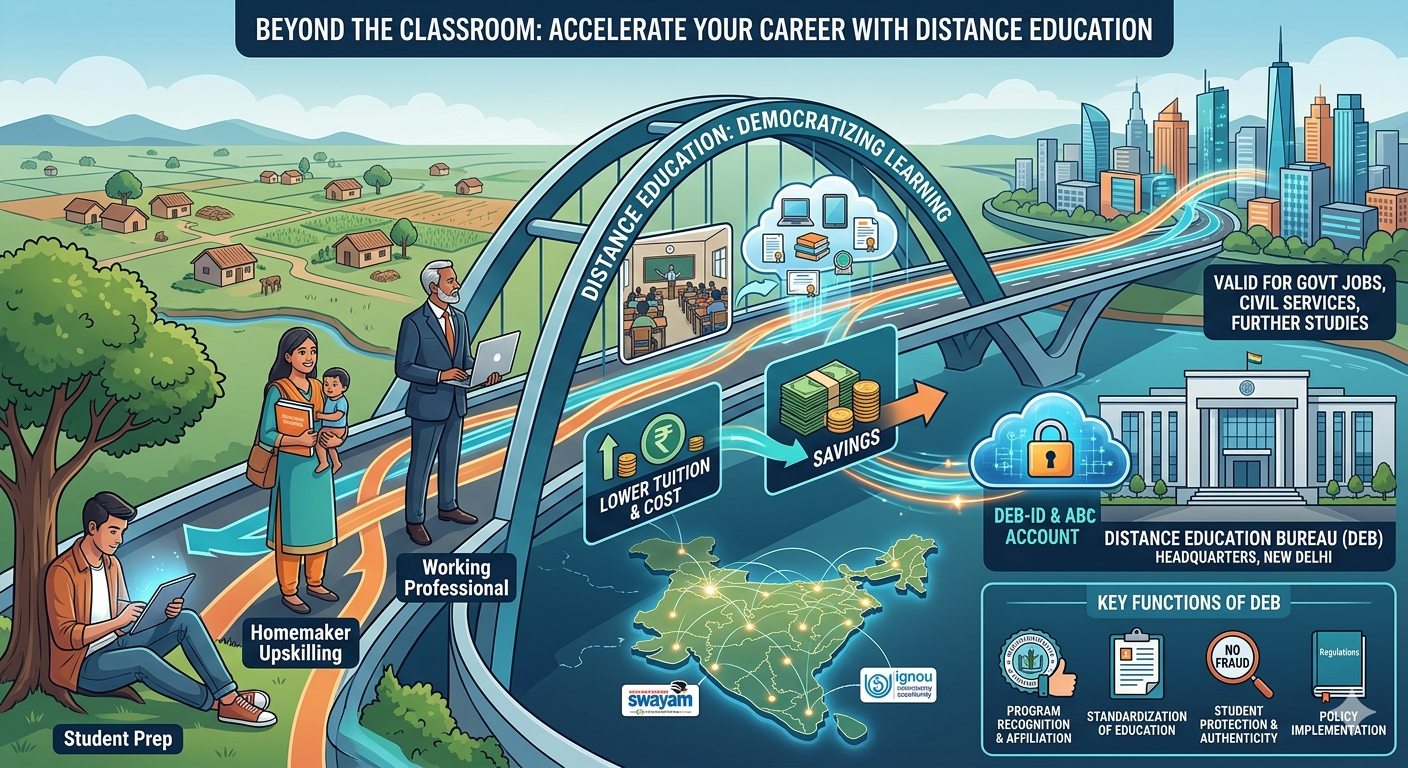
Distance education is a method of learning where students and instructors are physically separated by location and often time, relying on technology or printed media to bridge the gap. Instead of attending traditional physical classrooms, learners review material, complete assignments, and communicate remotely. Distance programs typically feature lower tuition fees and completely eliminate daily commuting, relocation, and on-campus housing costs. It gives learners the flexibility to study from anywhere. It is an ideal, cost-effective choice if learner wants to balance their education with a full-time job, family responsibilities, or if they live far from traditional university campuses. This flexibility highly benefits working professionals looking to upskill, homemakers, and students preparing for highly competitive exams.
Bridging the Gap: How Distance Education is Democratizing Learning in India
Distance education is thriving in India primarily because it democratizes learning in India by overcoming geographical, financial, and time barriers, and providing accessible and affordable learning for millions. It allows working professionals, individuals in remote areas, and those constrained by family responsibilities to earn recognized degrees without putting their lives on hold. Open and Distance Learning (ODL) serves a critical need in India’s massive and diverse educational landscape for several key reasons:
- Unmatched Flexibility: Students can learn at their own pace and balance their studies alongside day jobs or family obligations. There is no requirement to attend daily on-campus classes.
- Extreme Cost-Effectiveness: Distance education programs are significantly cheaper than traditional full-time degrees. Students save money on hostel fees, daily commutes, and campus facility charges.
- Equal Access to Quality Education: Institutions and government platforms democratize education. For example, the Indira Gandhi National Open University (IGNOU) and government portals like SWAYAM provide high-quality education and skill-building resources to learners residing even in the most remote areas of the country.
- Career Advancement: Working professionals can pursue higher education or add professional certifications to their resumes without taking career breaks. This continuous upskilling helps in speeding up career growth and salary increments.
- Full Legal Equivalence: Degrees and diplomas earned through recognized ODL programs from UGC-DEB-entitled institutions are fully recognized and legally equivalent to regular degrees for government jobs, corporate employment, and further education
Understanding the DEB: Ensuring Quality and Validity in Open & Distance Learning
The Distance Education Bureau (DEB) is the statutory body under the University Grants Commission (UGC) in India responsible for regulating, coordinating, and maintaining the quality of Open and Distance Learning (ODL) and online education programs across the country. Headquartered in New Delhi, the bureau was established in 2012 to replace the former Distance Education Council (DEC). The DEB plays several essential roles to ensure distance learners receive the same quality of education as traditional, on-campus students. Degrees obtained from DEB-approved programs are entirely valid for central and state government jobs, civil services, and further global education. The University Grants Commission (UGC) mandates that Open and Distance Learning (ODL) degrees from recognized universities hold the exact same value as regular offline degrees for government jobs and higher studies. However, the DEB explicitly prohibits professional fields from being taught entirely through distance mode. These include Engineering, Medicine, Dental, Nursing, Architecture, Pharmacy, and Law. Additionally, M.Phil and Ph.D. degrees cannot be earned through distance learning.
Key Functions of DEB:
- Program Recognition and Affiliation: The bureau reviews and approves universities that are permitted to offer distance and online degrees. It mandates strict eligibility criteria—such as specific NAAC or NIRF rankings—to ensure only high-performing institutions can operate distance education programs.
- Standardization of Education: The DEB sets the minimum guidelines for course design, faculty qualifications, evaluation patterns, and curriculum delivery. It ensures that the study material and examination structures for distance courses are of high quality and relevant to industry standards.
- Student Protection and Authenticity: The DEB conducts regular audits and monitoring to prevent fraudulent institutions (or unauthorized franchises) from operating, and continually publishes updated lists of recognized Higher Educational Institutions (HEIs) to protect students from fraudulent institutions. To prevent fraudulent admissions and increase transparency, the UGC-DEB mandates that every student enrolling in an approved ODL or online course must pre-generate a unique, lifelong digital identifier called a DEB-ID using their Academic Bank of Credits (ABC) account.
- Policy Implementation: Enforces the UGC (Open and Distance Learning Programmes and Online Programmes) Regulations to structure admissions, evaluation, and study material formats. These mandates detail baseline requirements for curriculum structure, faculty qualifications, examination systems, and digital/physical infrastructure.
- Maintains Standards: It sets guidelines for study materials, active learner engagement, and proctored examinations to ensure distance degrees are as credible as regular, on-campus degrees.
Prachi Sharma is a dynamic journalist and anchor known for her insightful reporting and engaging on-screen presence. With a strong command over storytelling and a flair for content creation, she brings clarity and depth to every piece she presents. Prachi’s versatile skills extend beyond journalism—her ability to craft compelling written content makes her a valuable voice in the media landscape. Whether on camera or behind the scenes, she is committed to delivering impactful narratives that inform, inspire, and connect with audiences.

You may like


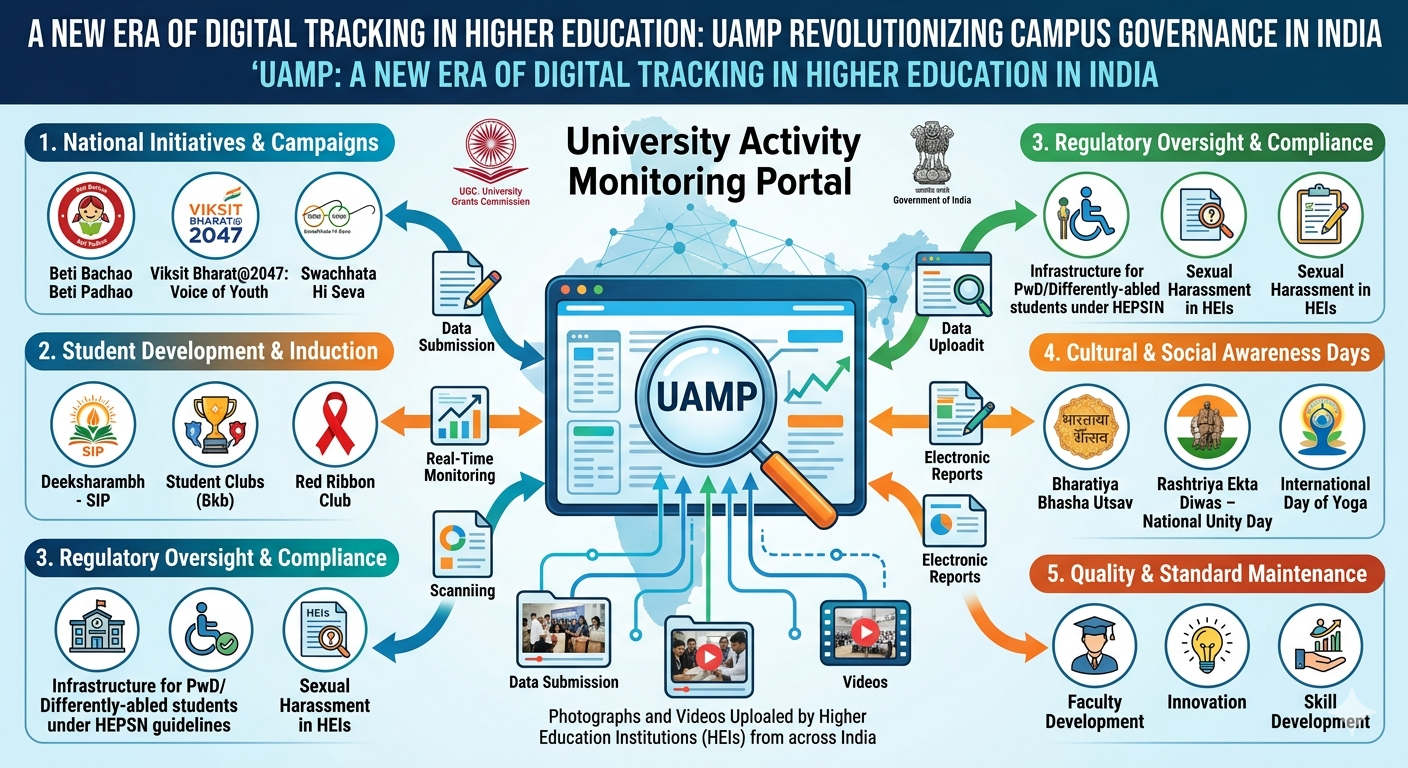
A New Era of Digital Tracking in Higher Education: UAMP Is Revolutionizing Campus Governance in India
-
Merging Theory with Experience: UGC’s Professor of Practice Initiative Brings Industry Expertise to Indian Universities
-
Standardizing the Future: An Overview of the National Testing Agency


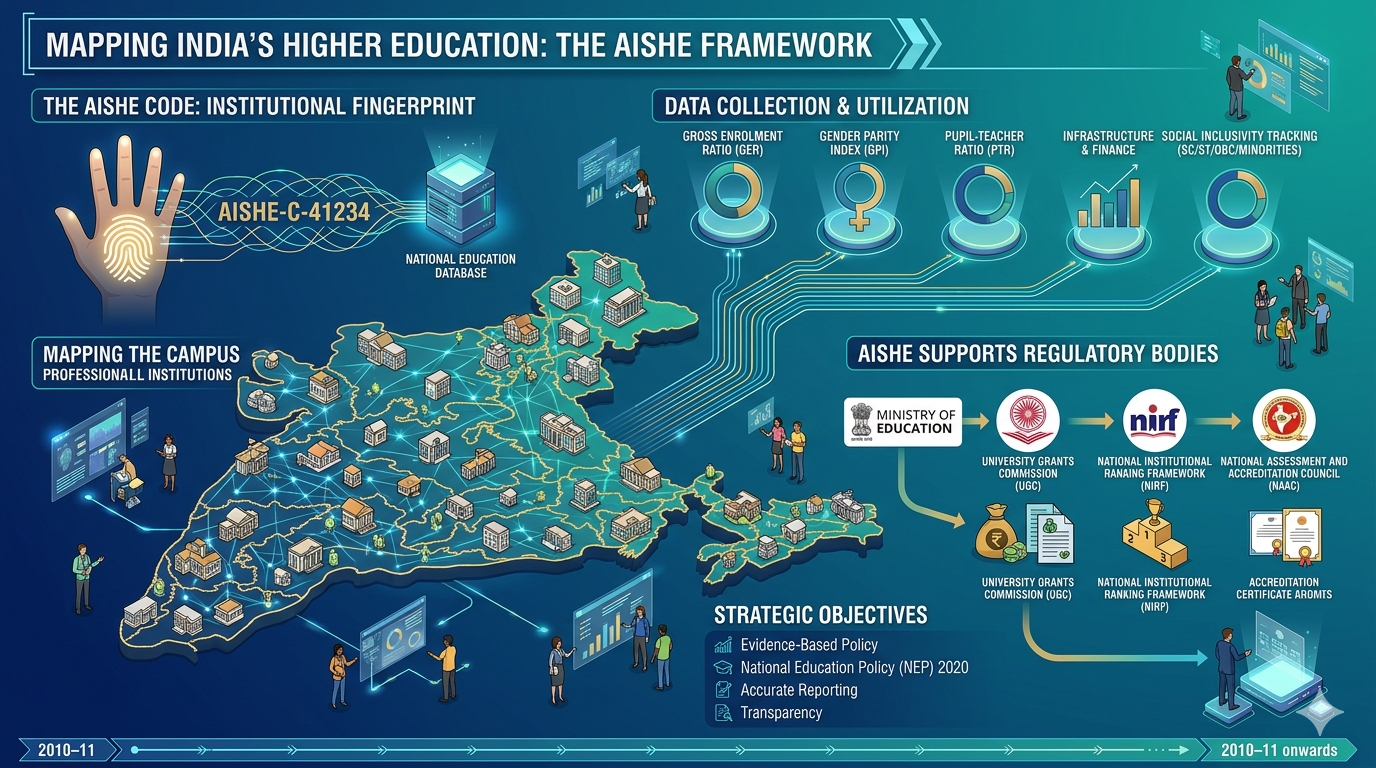
Mapping the Campus: How AISHE is Streamlining India’s Higher Education Framework
-
Seamless Verification: The Integration of NAD and DigiLocker in Indian Higher Education
-
The Digital India Milestone: Transforming Classrooms with NCERT’s ePathshala