Education
Standardizing the Future: An Overview of the National Testing Agency

Published
15 hours agoon
Authored by Trainee: Adarsh
NTA: India’s Premier Testing Organization
In India, to assess competence of candidates for admissions has always been a challenge in terms of matching with research based international standards, efficiency, transparency and error free delivery. Thus, the NTA (National Testing Agency) is entrusted to address all such issues using best in every field, from test preparation, to test delivery and to test marking.
The National Testing Agency (NTA) is an autonomous, premier, specialist, and self-sustained testing organization to conduct entrance examinations for admission/fellowship in higher educational institutions in India. Its primary mandate is to conduct efficient, transparent, and international-standard entrance examinations to assess the competence of candidates for admission to higher educational institutions. The agency is responsible for conducting numerous national-level exams for admission and fellowship in higher educational institutions related to engineering, medicine, management, research and pharmacy. While the NTA evaluates candidates and compiles the All India Rank (AIR), it does not handle the actual academic counselling or university seat allocation processes. Furthermore, it does not oversee curriculum development, which remains under bodies like the NCERT.
Understanding the NTA: Origin, Structure, and Accountability
NTA was established in 2017 by the Government of India under the Ministry of Education. It works under the Department of Higher Education within the Ministry of Education. It is governed by a Board of Directors and is run by educationists and IT experts, maintaining self-sustainability through the fees collected for examinations. It is registered as a society under the Indian Societies Registration Act, 1860, and is a public authority fully accountable under the Right to Information (RTI) Act. Before the NTA, major national exams were handled by various bodies such as the Central Board of Secondary Education (CBSE) and the All India Council for Technical Education (AICTE). The government established the NTA to:
- Relieve Existing Boards: It relieved other boards (like the CBSE) from the heavy administrative burden of organizing national competitive exams so they could focus entirely on academics rather than logistics.
- Level Playing Field: It was established to ensure that candidates across the country are evaluated on the exact same parameters, fostering equity in admissions to top-tier universities. It conducts efficient, transparent and international standards tests in order to assess the competency of candidates for admission purposes.
- Standardize Assessment: It implements research-based testing methodologies to ensure that entrance examinations are fair, valid, and reliable for all students, regardless of their socioeconomic background.
- Technological Modernisation:It was created to shift towards secure, computer-based testing (CBT) and digitized results to eliminate human error and manual evaluation delays.
- Conduct Research & Development: The NTA actively invests in psychometric and scientific testing to align India’s educational assessments with global international standards. It undertakes research on educational, professional and testing systems to identify gaps in the knowledge systems and take steps for bridging them.
- Bring Standardisation and Uniformity: NTA creates a uniform, scientific, and research-based testing systems. It implements highly researched, uniform assessment standards across India, eliminating administrative inconsistencies and bringing Indian entrance tests on par with international benchmarks.
The NTA’s Credibility Crisis
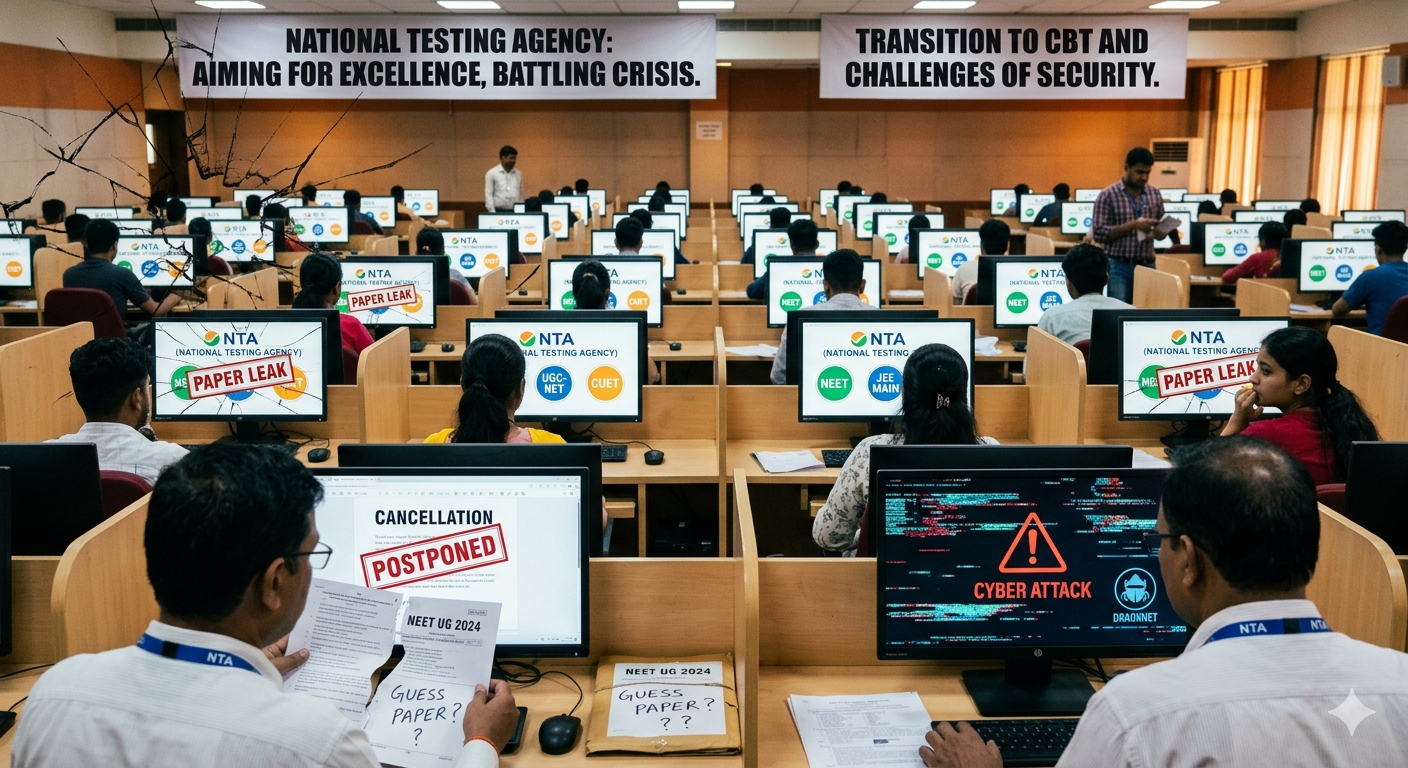
While the NTA has centralized and modernized the testing process, and has integrated high-level security reforms and data protection protocols to address logistical errors and preserve the fairness of public examinations, it has faced significant public scrutiny over the years. Incidents like technical glitches, controversy over the normalization of CUET scores, awarding grace marks, sudden changes in scorecards, and allegations of paper leaks in high-stakes exams like NEET and UGC-NET have led to public concern, legal challenges, and even high-level government-appointed panels to review data security and testing protocols. The primary controversies and systemic failures surrounding the agency include:
- NEET-UG Paper Leaks & Cancellations: The May 2026 NEET-UG examination was embroiled in a major paper leak controversy after handwritten “guess papers” were found matching the actual test. This forced the cancellation of the exam and prompted the Supreme Court to issue notices to the NTA and Ministry of Education over systemic failures. This followed the massive 2024 NEET-UG scandal, where leaked papers, systemic cheating, and controversial grace marks led to widespread protests and CBI investigations.
- UGC-NET 2024 Cancellation: The UGC-NET June 2024 exam was abruptly cancelled within 24 hours of its administration after intelligence revealed the paper had been leaked on the darknet.
- JEE (Main) Cyberattack 2021: The premier engineering entrance exam (JEE Main) was rocked by a massive scandal when a Russian hacker allegedly compromised the agency’s online testing platform (iLeon), allowing hundreds of candidates to employ proxies and cheat to secure high ranks.
- Technical & Answer Key Glitches: During several cycles, students have faced severe technical difficulties at Computer-Based Test (CBT) centers—including system shutdowns and frozen screens. Numerous errors in final answer keys and response sheets have also negatively impacted candidate scores.
- Grace Marks Controversy: NTA’s arbitrary normalization formulas and opaque distribution of grace marks have repeatedly drawn legal challenges from students claiming an uneven playing field.
Prachi Sharma is a dynamic journalist and anchor known for her insightful reporting and engaging on-screen presence. With a strong command over storytelling and a flair for content creation, she brings clarity and depth to every piece she presents. Prachi’s versatile skills extend beyond journalism—her ability to craft compelling written content makes her a valuable voice in the media landscape. Whether on camera or behind the scenes, she is committed to delivering impactful narratives that inform, inspire, and connect with audiences.

You may like


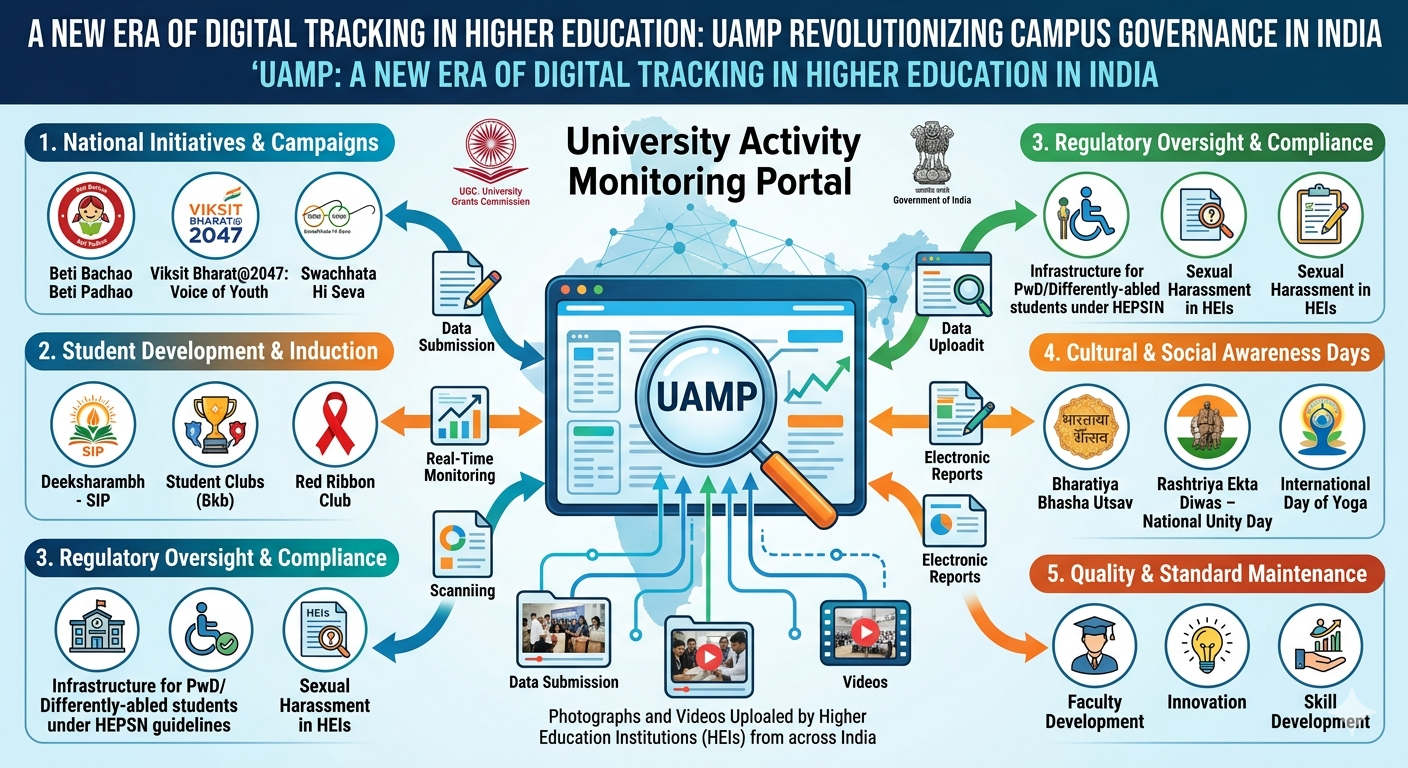
A New Era of Digital Tracking in Higher Education: UAMP Is Revolutionizing Campus Governance in India
-
Merging Theory with Experience: UGC’s Professor of Practice Initiative Brings Industry Expertise to Indian Universities
-
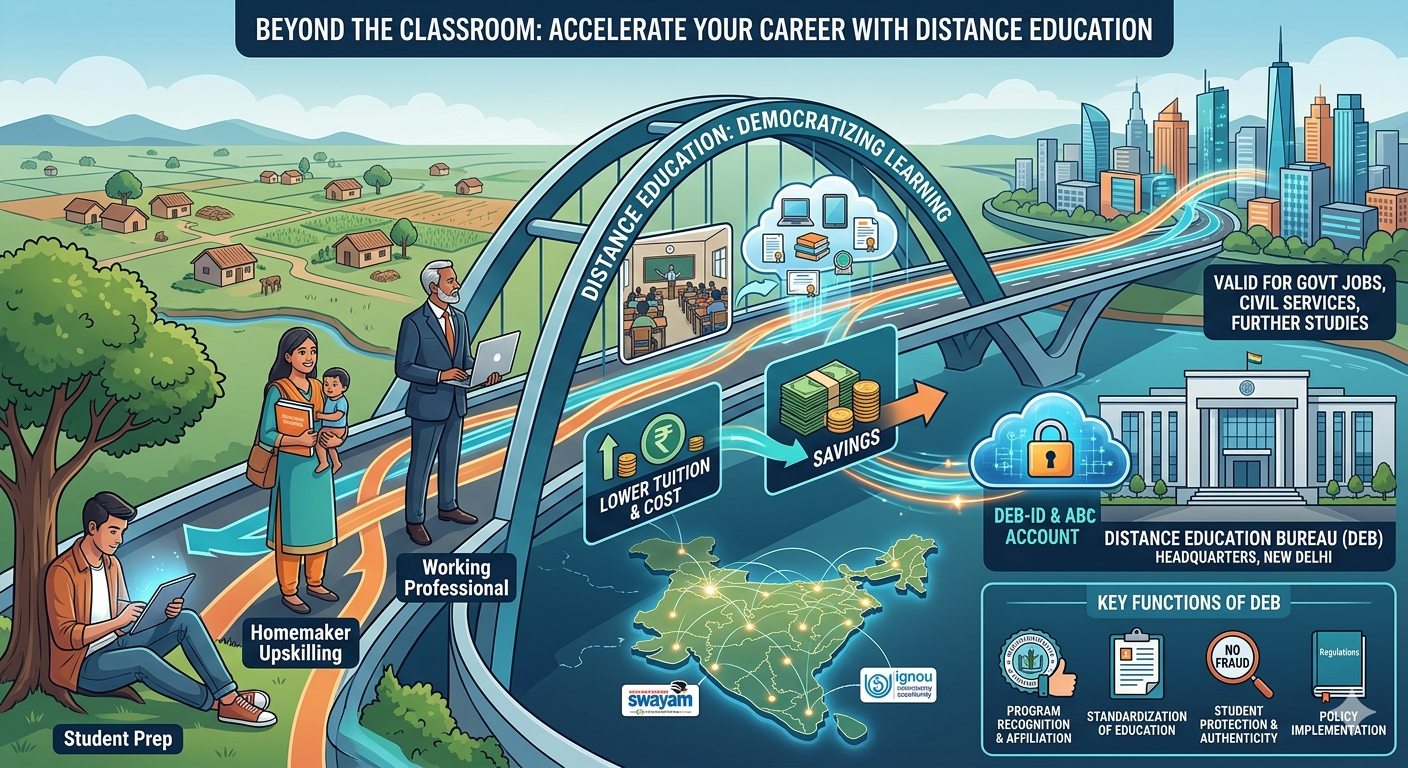
Fostering Academic Excellence: How the Distance Education Bureau Push for Quality Learning Anywhere


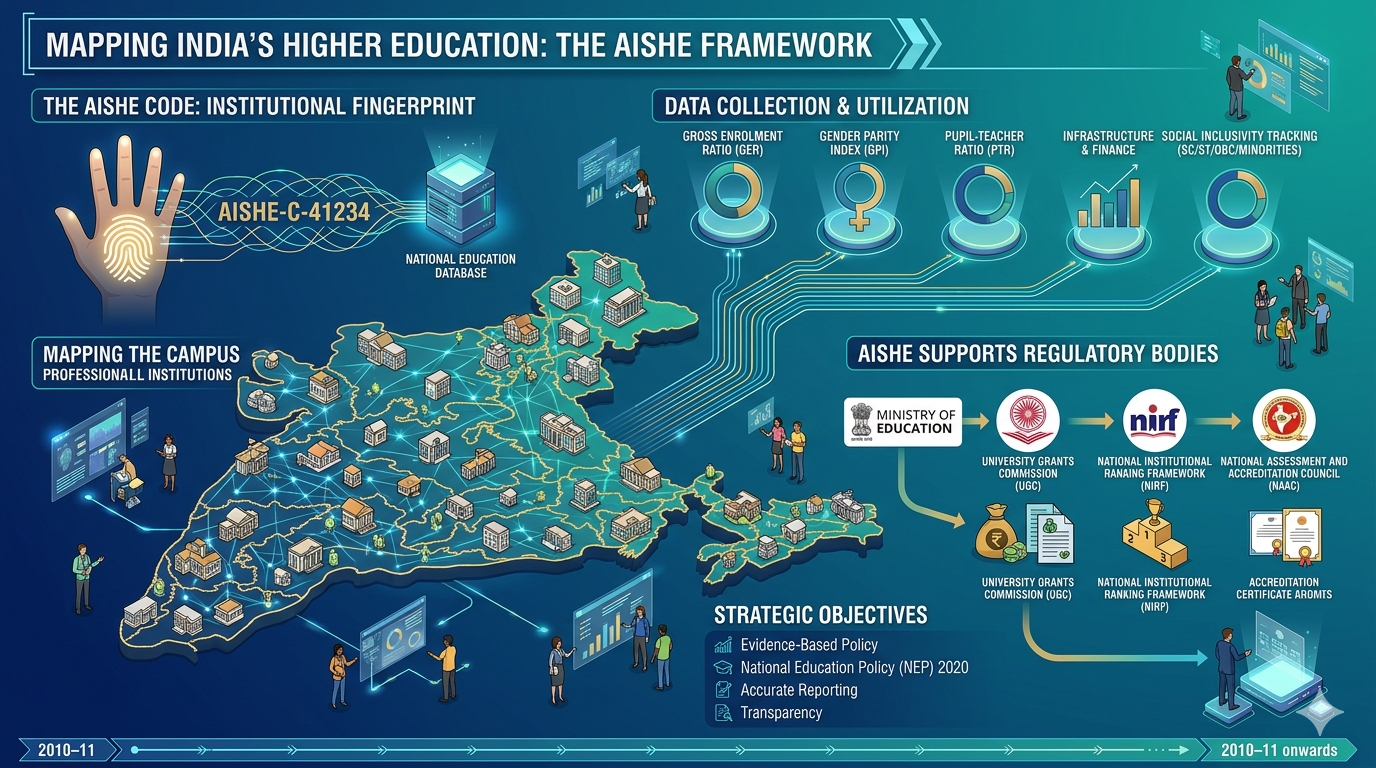
Mapping the Campus: How AISHE is Streamlining India’s Higher Education Framework
-
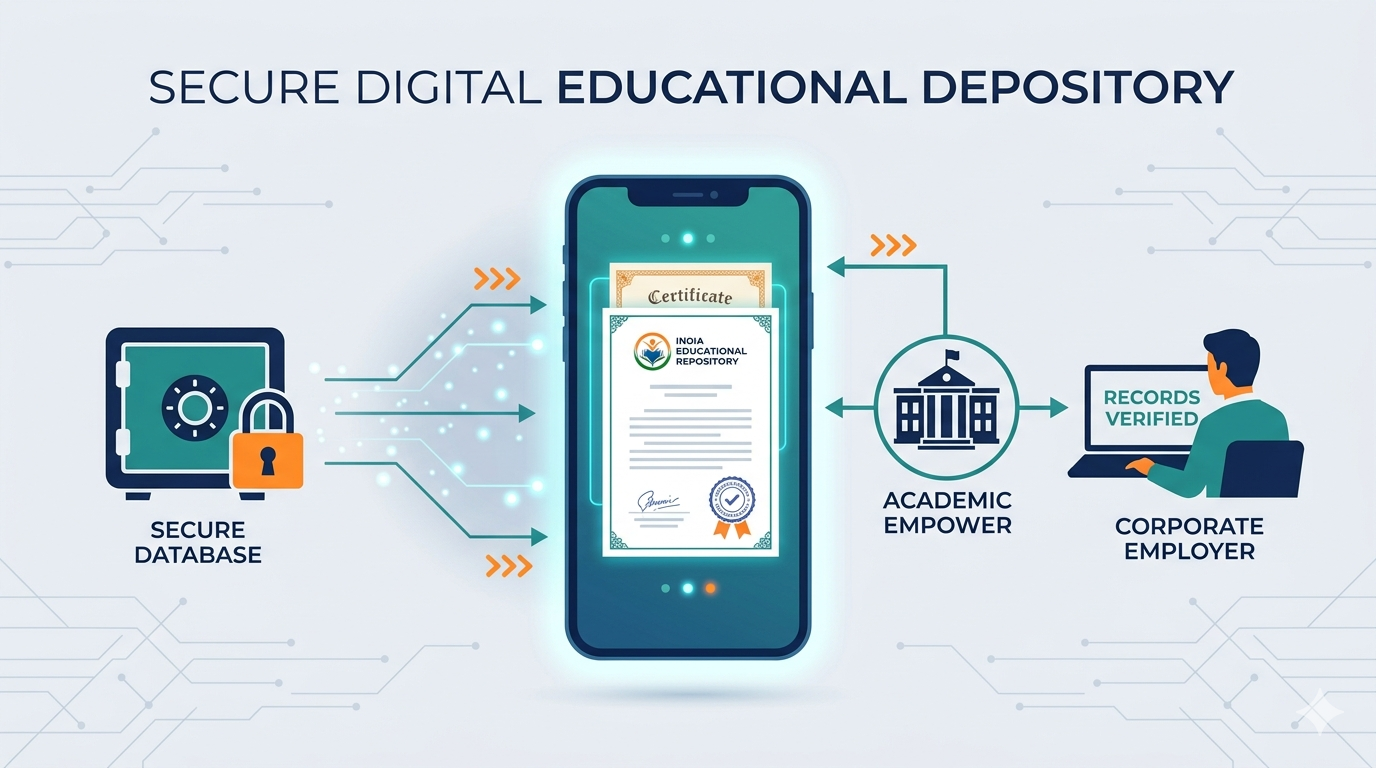
Seamless Verification: The Integration of NAD and DigiLocker in Indian Higher Education
-
The Digital India Milestone: Transforming Classrooms with NCERT’s ePathshala