Connect with us

Education

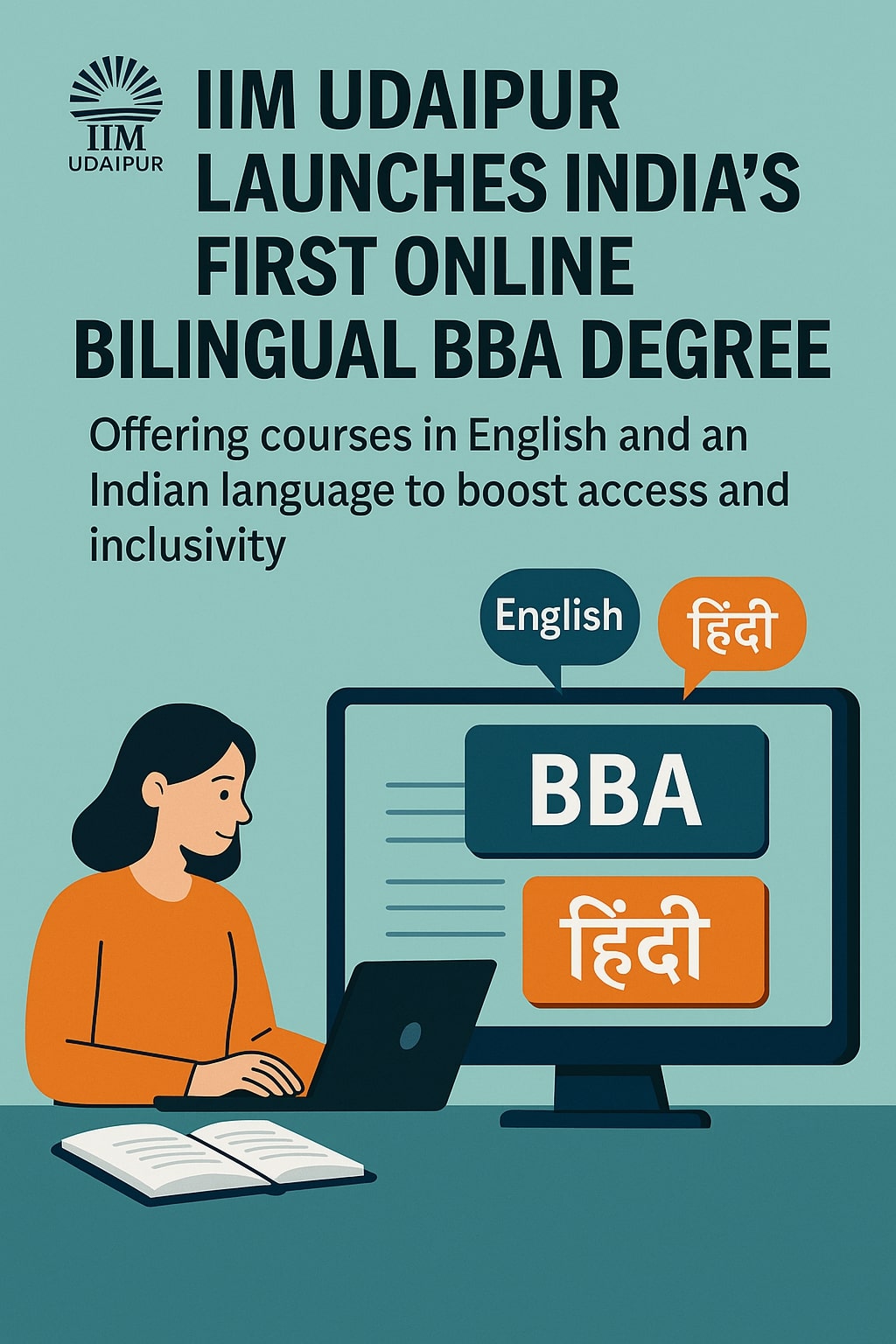
IIM Udaipur Launches India’s First Online Bilingual BBA Degree Programme
Prachi Sharma

Published

on

IIM Udaipur introduces India’s first online bilingual BBA degree to promote inclusive and accessible management education in English and Hindi.

In a landmark move to make quality management education more inclusive and accessible, the Indian Institute of Management (IIM) Udaipur has announced the launch of India’s first-ever fully online bilingual Bachelor of Business Administration (BBA) degree programme. Scheduled to begin in July 2026, the programme will be delivered in both English and an Indian language—starting with Hindi—marking a significant step toward democratizing business education for diverse learners across the country.

The bilingual BBA is designed especially for students who face barriers in accessing premier management education due to language, geography, or socioeconomic constraints. This includes students from Hindi-medium schools, first-generation college-goers, homemakers, learners from rural or semi-urban areas, and those from non-commerce or non-English educational backgrounds. By removing traditional filters like high cut-offs, residential requirements, and English-only instruction, the programme seeks to expand opportunities for underrepresented groups.

The curriculum will be delivered entirely online, allowing students flexibility in terms of time and location. In the first three years, students can opt to study primarily in Hindi, while English will be available as an optional medium from the very first year, enabling learners to gradually transition between languages if they wish. The use of digital and AI-powered learning tools will further support student understanding and engagement, especially for those not fluent in English.

Aligned with the National Education Policy 2020, the programme encourages the use of regional languages in higher education while also ensuring students gain essential English communication skills for the workplace. The structure includes multiple exit options, allowing students to leave with a diploma or certificate after completing a certain number of credits if they are unable to finish the full four-year programme.

According to IIM Udaipur Director Prof. Ashok Banerjee, this innovative BBA aims to remove the invisible barriers that have long kept vast sections of India’s population from accessing top-tier management education. By offering a bilingual model, the institute hopes to make business education truly inclusive, not just in policy but in practice.

This initiative places IIM Udaipur at the forefront of educational innovation among IIMs, as it redefines how language and flexibility can work together to create equal opportunities in the field of management.

Prachi Sharma is a dynamic journalist and anchor known for her insightful reporting and engaging on-screen presence. With a strong command over storytelling and a flair for content creation, she brings clarity and depth to every piece she presents. Prachi’s versatile skills extend beyond journalism—her ability to craft compelling written content makes her a valuable voice in the media landscape. Whether on camera or behind the scenes, she is committed to delivering impactful narratives that inform, inspire, and connect with audiences.

Education

CBSE Mandates Standard Infrastructure for Labs, Libraries and Sports in Schools

Prachi Sharma

Published

on

CBSE issues new guidelines mandating proper labs, libraries, and sports infrastructure in schools to promote holistic and experiential learning under NEP 2020.

The Central Board of Secondary Education has issued a comprehensive circular setting clear guidelines on the minimum infrastructure required for laboratories, libraries, and sports facilities in its affiliated schools. This initiative supports the goals of the National Education Policy 2020, which promotes practical learning and the overall development of students.

In its directive, CBSE emphasized that laboratories are essential for experiential learning. Properly equipped labs enable students to perform experiments, understand concepts more effectively, and connect classroom learning with real-world applications. This hands-on approach also helps in developing scientific thinking and technical skills among learners.

The circular further highlights the importance of school libraries as key academic resources. Libraries not only provide access to books and digital content but also foster independent learning and strengthen communication skills such as reading and writing. They play a vital role in nurturing curiosity and academic growth among students.

Recognizing the importance of physical education, CBSE has also made sports infrastructure a priority. Participation in sports is seen as crucial for developing discipline, teamwork, leadership qualities, and maintaining both physical and mental health.

The board has made several facilities compulsory across different school levels, including science laboratories (Physics, Chemistry, Biology), composite science labs, mathematics and computer science labs, library resources, and proper sports infrastructure. These requirements apply to both existing CBSE schools and those seeking affiliation.

Additionally, CBSE has introduced Standard Operating Procedures (SOPs) and safety guidelines for the use of these facilities. Schools must ensure compliance to maintain a safe and productive learning environment for students and staff.

Through this move, CBSE aims to bring uniformity in educational infrastructure and enhance the quality of learning across schools. The guidelines are expected to strengthen a more practical, inclusive, and well-rounded education system in the country.

Continue Reading

Bihar

BSEB Class 12 Results 2026: Girls Outshine Boys Again; Pass Percentage Hits 85.19%

Rohan Priyadarshi

Published

on

The Bihar School Examination Board (BSEB) officially declared the Intermediate (Class 12) results for the 2026 academic session today, March 23. Marking a significant milestone in administrative efficiency, the board announced the results just 25 days after the conclusion of the examinations.

According to the official data released by the Board Chairman, the overall pass percentage for this year stands at 85.19%. While this reflects a minor decrease from last year’s 86.56%, officials noted that the results indicate a high level of academic consistency across the state’s 38 districts.

The Gender Gap Widens

Continuing a multi-year trend in Bihar’s education sector, female students have once again outperformed their male counterparts. The pass percentage for girls reached 86.23%, compared to 84.09% for boys. The dominance of female students was most visible in the state topper list, where 19 of the top 26 positions were secured by girls.

Stream-Wise Excellence

The results showcased brilliance across all three academic streams—Science, Commerce, and Arts:

  • Science: Aditya Prakash Aman from Samastipur clinched the top rank statewide, scoring a remarkable 96.20%.

  • Commerce: Aditi Kumari, representing Patna, topped the stream with a solid 96%.

  • Arts: Nishu Kumari from Gaya emerged as the leader with 95.8%.

Democratization of Success

While Patna remains a hub for high-achieving students in the Commerce stream, the 2026 results highlight a shift toward rural and semi-urban excellence. Districts such as Samastipur, Gaya, and Sitamarhi produced the highest-ranking students in the state, suggesting that government initiatives to improve educational infrastructure in smaller towns are yielding results.

Efficiency in Evaluation

The BSEB has maintained its reputation as the fastest-moving state board in the country. By concluding the evaluation of over 1.3 million students by mid-March, the board ensures that Bihar’s students are well-positioned to apply for national-level entrance exams and central university admissions without delay.

Next Steps for Students

For students who are unsatisfied with their scores or those who failed to secure passing marks in one or two subjects, the board has announced the following timeline:

  • Scrutiny Applications: Open from March 25.

  • Compartmental Exams: Registration begins in the last week of March, with exams scheduled for early April.

Students can access their digital marksheets on the official BSEB portal using their roll code and roll number.

Continue Reading

Education

Major Overhaul: CBSE Class 9 Syllabus Changes for 2026-27 Academic Session

Rohan Priyadarshi

Published

on

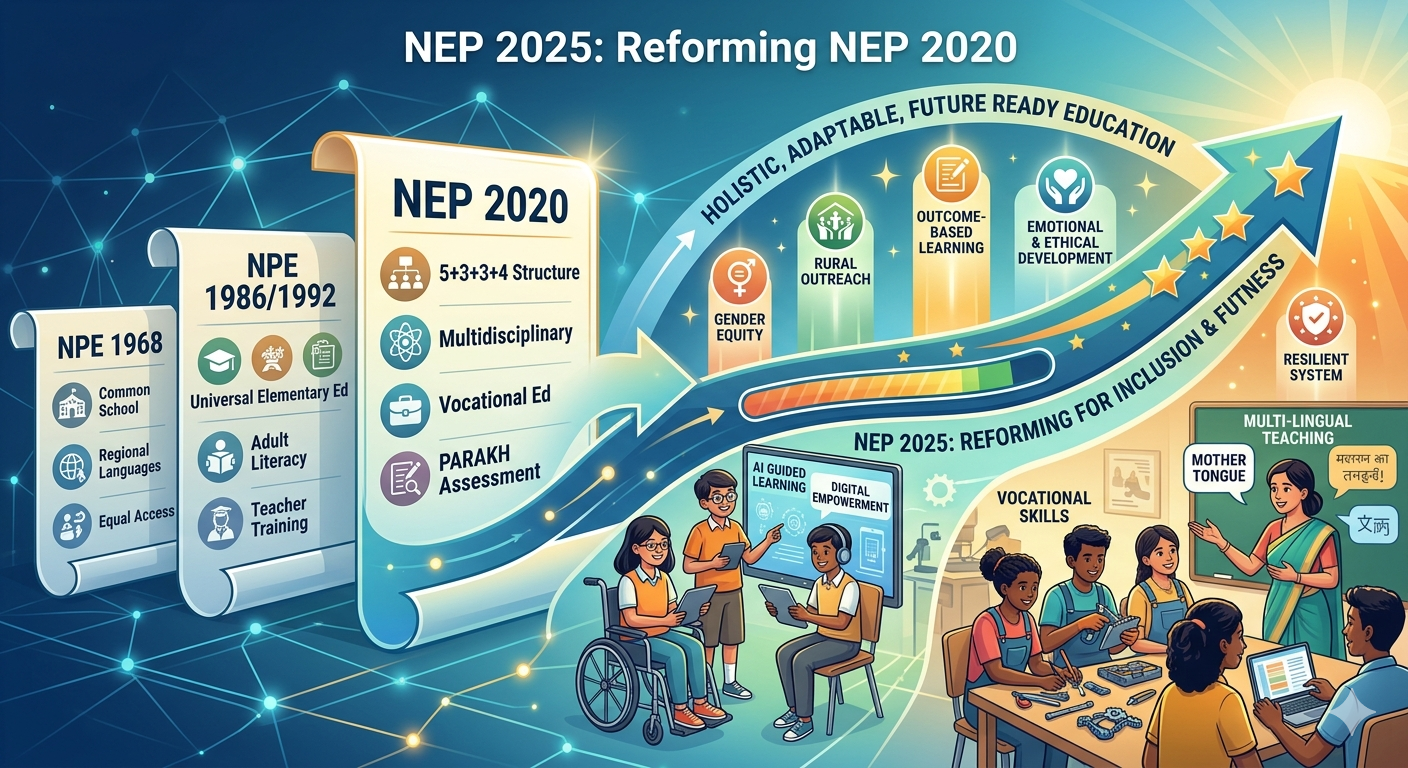
The Central Board of Secondary Education (CBSE) and the National Council of Educational Research and Training (NCERT) have officially unveiled a transformative revised syllabus for Class 9, set to be implemented for the 2026-27 academic session.

This update, rooted in the National Curriculum Framework for School Education (NCF-SE 2023), moves significantly away from traditional rote learning toward a competency-based, interdisciplinary model. Students entering Class 9 this year will experience a redesigned curriculum that introduces advanced concepts earlier while simplifying the overall academic load.


Core Subjects: Depth Over Breadth

The most striking changes are found in the core academic pillars of Mathematics and Science. Rather than just memorizing formulas, students are now expected to demonstrate “meaning-making” and real-world application.
Mathematics: Advanced Concepts Early
In a move to better prepare students for competitive landscapes, the Mathematics syllabus has expanded from 12 to 15 chapters. Several topics previously reserved for Class 10 and 11 have been shifted down to Class 9:

  • Arithmetic Progression (AP): Formerly a Class 10 staple, this is now a foundation topic in 9th grade.

  • Geometric Progression (GP): Introduced from the Class 11 curriculum to build early analytical strength.

  • Two-Tier System: Mirroring the Class 10 model, CBSE is introducing Basic and Standard levels for Mathematics in Class 9 to cater to different student aptitudes.

Science: Practicality Over Theory

While the number of chapters has slightly decreased, the depth of content has intensified.

  • Physics: The “Gravitation” chapter has been restructured, while “Work and Energy” is now “Work, Energy, and Simple Machines,” introducing practical mechanics like pulleys and levers.

  • Biology: Two new chapters, Reproduction and Diversity, have been added to provide a more holistic understanding of life sciences, replacing older chapters like “Improvement in Food Resources.”

  • Chemistry: Emphasis has shifted toward molecular interactions and chemical reactions with direct laboratory applications.

Language & Social Science: A Cultural Facelift

The humanities and languages are also seeing a major “modernization” effort to reflect contemporary global and Indian contexts.

  • English: The long-standing textbooks Beehive and Moments are being phased out in favor of a single comprehensive textbook titled Kaveri. The new curriculum focuses on 21st-century communication skills, creative writing, and critical analysis of diverse literary texts.

  • Social Science: The subject now integrates geospatial data. Teachers are encouraged to use Bhuvan (India’s satellite platform) for Geography lessons. History and Political Science have been streamlined to focus on cause-effect relationships rather than just chronological dates.

  • Financial Literacy: Economics now includes practical life skills such as budgeting, income tax basics, and investment options, moving beyond purely theoretical models.

New Curricular Areas: The “Whole Student”

Following the NEP 2020 vision, the 2026-27 session introduces entirely new interdisciplinary areas:

  1. Individuals in Society: A subject focusing on ethics, personal identity, and social harmony.

  2. Vocational Education: Equal weightage is now given to work-centered knowledge, aiming to remove the stigma around vocational skills.

  3. Indian Knowledge Systems (IKS): Traditional Indian wisdom in science and mathematics is now woven into the modern curriculum.

Assessment: The 360-Degree Progress Card

The evaluation system is moving toward a “360-degree” assessment model. The focus is shifting from a single high-stakes annual exam to a continuous feedback loop.

  • Open-Book Exams: Some assessments will now be open-book to test the application of knowledge rather than recall.

  • Internal Assessment (20 Marks): This remains crucial, utilizing portfolios, peer assessments, and “exit cards” to track student progress throughout the term.

  • Competency-Based Questions: At least 50% of the question paper will now consist of case-based questions, MCQs, and assertion-reasoning tasks.

Advice for Students and Parents

Education experts advise parents not to purchase old textbooks or second-hand materials from previous years. The shift is so significant that older resources will be largely irrelevant. The new NCERT textbooks are expected to be available in markets by late March 2026.

This overhaul is more than just a change in chapters; it is a fundamental shift in the Indian education philosophy—prioritizing how to think over what to think.

Continue Reading

Trending